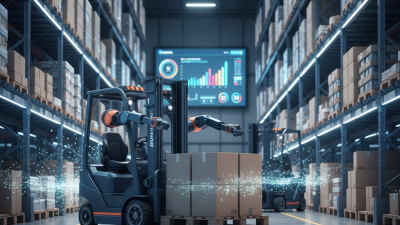
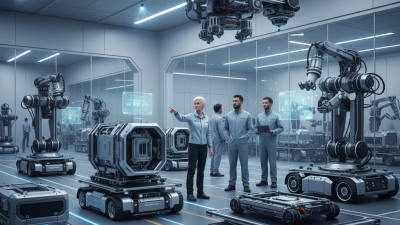
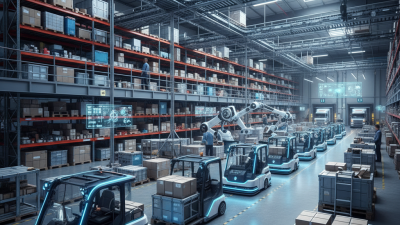
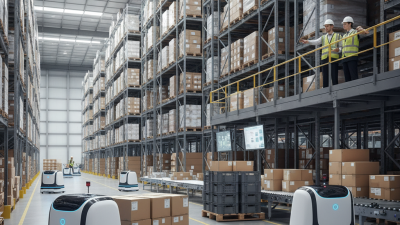
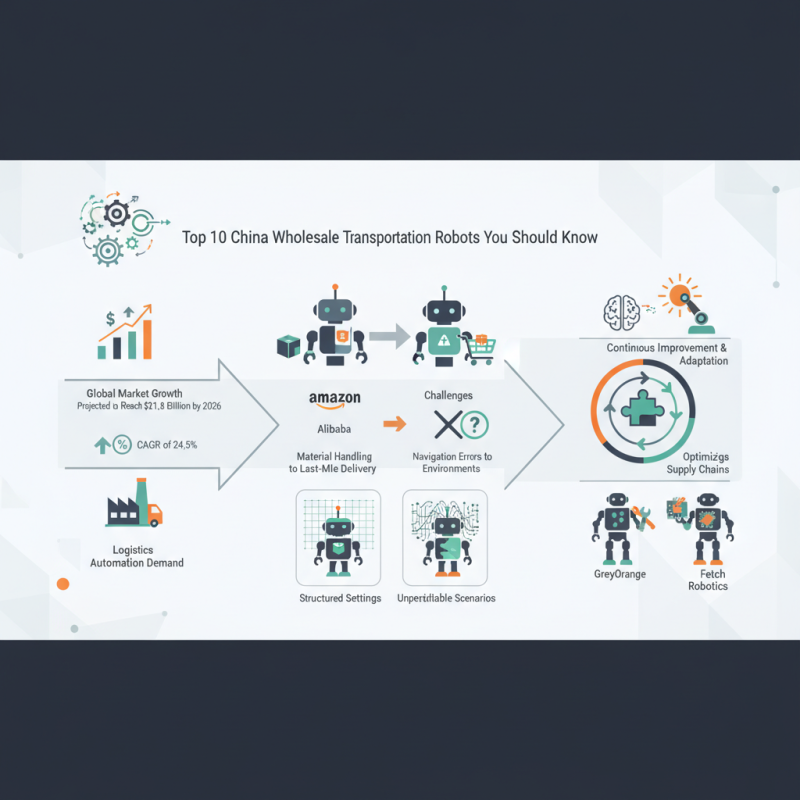
Lately, there's been a real boost in how much companies want to automate their logistics processes. The global market for Transportation Robots is expected to hit around $21.8 billion by 2026, growing at a hefty CAGR of about 24.5%. That’s pretty impressive, right? It just shows how much businesses are counting on these robots to boost efficiency and cut down on costs. Big names like Amazon and Alibaba are definitely leading the charge, using robots for everything from moving goods around warehouses to delivering packages in the last stretch of delivery.
Of course, it’s not all smooth sailing. There are definitely some hurdles. For example, navigation mistakes and trouble adapting to ever-changing environments can slow things down. You know, while many robots work like a charm in tidy, structured setups, they can stumble in more unpredictable, chaotic situations. It’s clear that robotic tech still needs a lot of polishing and ongoing development.
For businesses wanting to get the most out of their supply chains, it’s super important to keep an eye on the top manufacturers and models out there. Companies like GreyOrange and Fetch Robotics are constantly pushing the envelope with new innovations. So, staying updated on their latest moves is key. The future looks pretty promising for Transportation Robots, but let’s be real—you gotta keep learning and adapting as the tech keeps evolving. It’s an exciting time, no doubt!
Overview of China’s Wholesale Transportation Robotics Market
China's wholesale transportation robotics market is thriving. With rapid advancements, these robots are transforming logistics and supply chains. Companies are exploring automation solutions to increase efficiency. Mow Robot technologies are taking the forefront in this evolution. They are designed to streamline material handling, delivering goods swiftly and accurately.
The variety of robots available is impressive. From autonomous mobile robots to specialized transport drones, each plays a vital role. Industry experts note that the growing labor costs and demand for speed are driving this change. However, challenges remain. Some businesses struggle with the initial investment in robotic systems. Others face integration issues within existing operations. Addressing these hurdles requires thoughtful planning and expertise.
Despite these challenges, the advantages are clear. Efficiency gains and reduced human error are significant benefits. Nevertheless, companies must consider the human element. Workers may feel threatened by automation. Ensuring proper training and job transition programs is essential. Investing in technology like Mow Robot should be accompanied by a focus on workforce adaptability. This approach can lead to a more harmonious and productive environment.
Key Features of Leading Transportation Robots in China
Transportation robots have become essential in China's logistics sector. These robots vary greatly in design, functionality, and use cases. A notable feature is their ability to navigate complex environments. Many incorporate advanced sensors and AI, allowing them to adapt to real-time changes.
It's fascinating how some robots can autonomously load and unload cargo. This cuts down on manual labor and increases efficiency. Additionally, many models support seamless integration with existing supply chain operations. They can communicate with inventory management systems, minimizing human error and optimizing routes.
Tip: When considering transportation robots, look for features that enhance flexibility. Robots should handle diverse tasks and props. Also, explore their maintenance needs. Regular upkeep ensures longevity and sustained performance. Finally, observe user feedback on operational challenges. Understanding these aspects helps make informed purchasing decisions.
Top 10 Wholesale Transportation Robots for Various Industries
In various industries, wholesale transportation robots are revolutionizing logistics. These robots enhance efficiency and reduce labor costs, making them essential in warehouses, manufacturing, and retail. According to recent industry reports, the global market for robotics in logistics is projected to reach $37 billion by 2027. Yet, implementation poses challenges. Many companies struggle with high initial costs and integration with existing systems.
In warehouses, autonomous mobile robots (AMRs) are rapidly gaining popularity. They can navigate complex environments with ease, handling diverse tasks from picking to packing. Reports indicate that AMRs can improve operational efficiency by up to 30%. However, the transition requires skilled personnel for management and maintenance, which some businesses overlook.
In retail environments, robots assist in inventory management and customer service. Studies show that robots can help retailers reduce stock discrepancies by 25%. Yet, their deployment often raises concerns about customer experience and workforce displacement. Retailers must carefully balance automation with human interaction to maintain customer satisfaction and address ethical implications.
Comparative Analysis of Robotics Technologies in China
China's robotics industry is evolving rapidly, particularly in transportation.
Agv Robots,
which stand for autonomous guided vehicles, play a vital role in warehouse logistics.
According to a report from the China Robotics Industry Alliance, the market for logistics robots is expected to reach
¥60 billion by 2025. This growth reflects increasing demand for automation in supply chains.
Within this sector, diverse technologies are gaining traction. For instance,
LiDAR and vision-based navigation systems are enhancing the precision of Agv robots.
However, challenges remain, such as the high initial investment costs.
A study indicates that 64% of companies cite upfront expenses as a major barrier to implementation.
Companies must also address issues with integration into existing systems.
The compatibility of robotics software with current IT frameworks often poses difficulties.
Furthermore, labor market shifts demand retraining for workers displaced by automation.
As firms transition, they should weigh the long-term benefits against these immediate challenges.
Future Trends in China’s Transportation Robot Industry
The transportation robot industry in China is undergoing rapid evolution. Many firms are investing in automated solutions for logistics. These robots streamline operations and enhance efficiency. They can navigate complex environments while transporting goods. However, challenges remain.
Current trends indicate an increase in the use of AI-driven robots. These advancements allow for better decision-making. Many robots are also becoming more user-friendly. Yet, integration with existing systems poses obstacles. Companies must consider training their workforce to adapt. This shift may not happen overnight.
Sustainability is becoming a core focus. Eco-friendly designs are gaining attention in the industry. Robotics could reduce carbon footprints significantly. Nevertheless, the reliance on technology raises questions. Are we ready to trust robots for critical tasks? The industry must address these valid concerns.
Top 10 China Wholesale Transportation Robots You Should Know
| Rank |
Robot Type |
Load Capacity (kg) |
Navigation Type |
Battery Life (hours) |
Price Range (USD) |
| 1 |
Autonomous Mobile Robot |
100 |
Lidar |
8 |
5000 - 7000 |
| 2 |
Automated Guided Vehicle |
200 |
Magnetic |
12 |
8000 - 12000 |
| 3 |
Delivery Robot |
50 |
Visual |
10 |
3000 - 5000 |
| 4 |
Forklift Robot |
1500 |
Laser |
6 |
15000 - 20000 |
| 5 |
Tugger Robot |
500 |
Vision + Lidar |
8 |
10000 - 13000 |
| 6 |
Stacking Robot |
800 |
Laser |
11 |
12000 - 16000 |
| 7 |
Inspection Robot |
30 |
GPS |
14 |
2000 - 3500 |
| 8 |
Warehouse Robot |
400 |
Vision-based |
9 |
5000 - 8000 |
| 9 |
Mobile Platform Robot |
250 |
Laser + Inertial |
12 |
6000 - 9000 |
| 10 |
Robotic Palletizer |
1000 |
Automated |
10 |
20000 - 25000 |
Benefits of Implementing Transportation Robots in Wholesale Operations
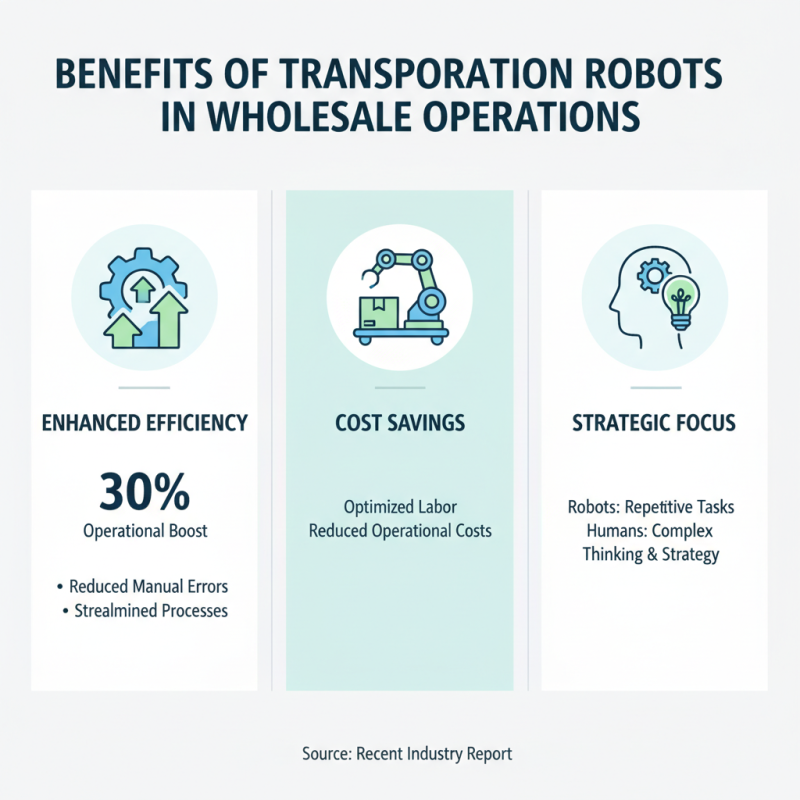
Transportation robots in wholesale operations are rapidly gaining traction. The logistics sector benefits greatly from automation. According to a recent industry report, the adoption of robotics can enhance operational efficiency by up to 30%. This increase results from reduced manual errors and streamlined processes. With robotic systems handling repetitive tasks, human workers can focus on more complex responsibilities that require strategic thinking.
Implementing transportation robots also leads to significant cost savings. These machines can operate around the clock without fatigue. A report from a logistics industry analysis highlights that businesses save up to 20% in labor costs. Moreover, robots can transport goods quickly and efficiently. This speed is vital in a competitive landscape where time is of the essence.
Yet, the integration of transportation robots is not without challenges. Companies must consider the initial investment and ongoing maintenance costs. Not all employees may feel comfortable with the technology. This aspect requires careful training and adaptation. There may also be concerns regarding job displacement. Striking a balance is necessary for a smooth transition. The role of human oversight remains critical, especially when systems like the Lawn Robot are involved in sensitive tasks.
Challenges and Considerations for Adopting Robots in Logistics
The adoption of robots in logistics is on the rise. However, companies face significant challenges. Research indicates that over 70% of logistics companies are hesitant to embrace automation due to high upfront costs and integration issues. For example, Yard Robots require compatibility with existing systems. Without this, efficiency gains can be minimal.
Another concern is workforce displacement. A recent survey revealed that 58% of employees worry about job loss from automation. This fear can hinder acceptance of robotic solutions in warehouses and freight yards. Companies must balance technological benefits with employee concerns. Proper training and upskilling programs are crucial. Engaging workers in the transition process is essential for smoother adoption.
Furthermore, maintenance of these robots poses a challenge. Regular servicing is needed, and often, specialized knowledge is required. A study found that equipment downtime in logistics can exceed 20%. This can negate potential productivity gains from using Yard Robots. Companies must plan for these maintenance needs as part of their automation strategy. Addressing these challenges is crucial for successful implementation.
Revolutionizing Industries: The Impact and Versatility of Multi-Functional Intelligent Service Robots in Modern Factories
In the age of Industry 4.0, multi-functional intelligent service robots are taking center stage, revolutionizing the operational efficiency of modern factories. The introduction of a universal chassis system, designed for exceptional performance across diverse environments, exemplifies this shift. This advanced system is capable of navigating complex factory layouts, including crossing thresholds and maneuvering through S-shaped pathways, while also fitting into tight spaces. Such versatility allows manufacturers to deploy robotic solutions across various scenarios with ease, enhancing productivity and minimizing downtime.
Additionally, the integration of multiple sensors into these robots enables them to collect vital data on environmental conditions, dining preferences, and service metrics. This data is then utilized for comprehensive big data analysis in the cloud, providing businesses with actionable insights for improving operations. With a robust 35Ah battery, these intelligent robots ensure up to 15 hours of continuous operation, addressing the reliability concerns of suppliers in need of automation solutions. By harnessing the adaptability and efficiency of these service robots, businesses can significantly elevate their performance and competitiveness in the evolving industrial landscape.
FAQS
: They are robots designed to enhance logistics and streamline operations in various industries.
These robots can automate tasks, reducing human error and increasing productivity in tasks like picking and packing.
High initial costs and integration issues with existing systems are major barriers to adoption.
AMRs can boost operational efficiency by up to 30%, improving handling of complex logistics tasks.
Robots assist in inventory management but can raise concerns about customer experience and human job replacement.
Skilled workers are needed for managing and maintaining robots, which is often overlooked in transition plans.
LiDAR and vision-based navigation systems improve the precision and functionality of Agv robots.
About 64% of businesses cite initial investment costs as a significant hurdle for implementing robotics.
Automation can displace workers, creating a need for retraining to help them transition into new roles.
Firms must weigh the long-term benefits against initial challenges and the potential need for workforce retraining.
Conclusion
The article provides a comprehensive overview of China's wholesale transportation robotics market, highlighting the importance of transportation robots in modern logistics operations. It examines key features of leading transportation robots, showcasing their versatility across various industries. The discussion includes a comparative analysis of different robotics technologies, emphasizing innovations that drive the sector forward.
The future trends of the transportation robot industry in China indicate a growing integration of artificial intelligence and machine learning, enhancing operational efficiency. Additionally, the article discusses the benefits of implementing these robots, such as cost reduction and improved accuracy in logistics. However, it also addresses challenges and considerations businesses must navigate when adopting transportation robots, ensuring a strategic approach to logistics automation.