You know, with e-commerce booming, there's been a serious push for faster, more efficient delivery options. I’ve read that the market for Smart Delivery Robots might hit around $1.5 billion by 2025. That's a clear sign that more and more folks are relying on automation to get packages from A to B. Companies like Starship Technologies and Nuro are really pushing the envelope, using advanced robots to make last-mile deliveries quicker and cheaper—saving both time and money.
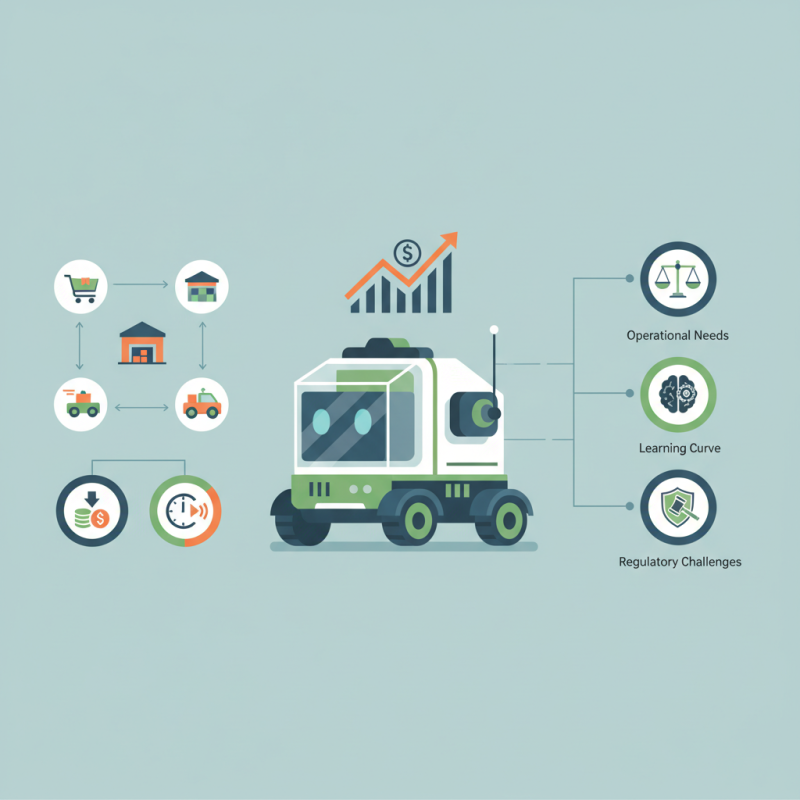
If you're thinking about adding a Smart Delivery Robot to your business, it’s kind of like shopping for a new gadget—it pays to do some homework. Different models come with different features, like how much they can carry or how they navigate streets. It’s super important to consider what your specific needs are. Some businesses find the whole process a bit tricky at first, especially when trying to fit these robots into their current workflows.
And don’t forget, regulatory stuff can sometimes get in the way, depending on where you are. Doing your research is key—know what these robots can do and check out the laws in your area. That way, you’ll be in a better spot to pick the right one and get everything up and running smoothly. When you choose wisely and plan ahead, a smart delivery robot can really boost your efficiency and improve your service. Just takes a little patience and some careful planning, that’s all.
Understanding Smart Delivery Robots: Key Features and Benefits
Smart delivery robots are revolutionizing logistics for businesses. They offer numerous key features that can enhance efficiency and reduce costs. One of the main benefits is their ability to operate autonomously. This means they can navigate complex environments with minimal supervision. They utilize advanced sensors and cameras to avoid obstacles. The technology behind these robots continues to evolve, making them more reliable.
Another important aspect is the flexibility of Robot Smart. They can be programmed for various delivery scenarios. Whether it's fast food or retail items, they adapt to different tasks. Businesses can customize their delivery systems according to specific needs. However, challenges remain. High initial costs can deter some businesses. Also, understanding customer acceptance is crucial. Not all consumers are comfortable with robots handling their deliveries.
When choosing a Robot Smart for your business, consider the user interface. An intuitive dashboard helps manage deliveries more effectively. Integration with existing systems also plays a vital role in smooth operations. Furthermore, evaluate the support and maintenance offered. Regular updates and service can enhance longevity. Balancing these factors will help you make a better-informed decision.
Smart Delivery Robot Capabilities
This chart illustrates various key capabilities of smart delivery robots that businesses should consider when selecting a delivery solution. Metrics include autonomy level, speed, payload capacity, battery life, and communication range.
Assessing Your Business Needs for a Delivery Robot Solution
Assessing your business needs is crucial when choosing a smart delivery robot. Every business is different, and defining your logistics challenges is a good start. For instance, consider the volume of deliveries you handle daily. A high-traffic cafe may need quicker solutions than a boutique store with fewer customers. Understanding your delivery frequency helps you match a robot’s capabilities to your demands.
Next, evaluate the delivery environment. Is your space crowded? Obstacles can affect performance. Robots might struggle in tight corridors or busy sidewalks. You should also reflect on the types of goods you deliver. Are they fragile or heavy? Some robots handle various weights, while others are specialized. Think about your customers too. How do they prefer receiving items? Convenience is key. You might need features that allow easy interaction for your users.
Finally, cost is a primary consideration. The initial investment can be high, but think long-term. Weigh the benefits against the expenses. Consider maintenance and potential upgrades. Not every robot will align perfectly with your needs. Gathering feedback from your team and testing options can guide your choices. It’s a journey, and not every path will lead to success; some reflection is necessary along the way.
Comparing Different Types of Smart Delivery Robots Available
When selecting a smart delivery robot for your business, it’s crucial to understand the various types currently available. The market has evolved with diverse options, including wheeled robots, drones, and hybrids. According to a 2022 industry report, the global robot delivery market is projected to reach $5 billion by 2028, showcasing rapid growth and innovation.
Wheeled robots are commonly used in urban settings. They navigate sidewalks, delivering food and parcels efficiently. Drones, on the other hand, provide services in less accessible areas. Each type has strengths and weaknesses, affecting delivery speed and capacity. The hybrid models combine the best of both worlds but come with a higher cost and complexity.
Tips: Consider your delivery needs. Think about storage and weight limitations. The right choice will depend on your specific operational demands. Reliability is essential; failure rates can be as high as 10% for certain models. Always calculate potential overhead costs, as they can impact your business budget. Lastly, popularity does not guarantee effectiveness. Many businesses overlooked that a Smart Robot Lawn Mower can also optimize delivery routes by maintaining landscaping, thus enhancing overall business aesthetics.
Evaluating Cost-Effectiveness and Return on Investment
When evaluating the cost-effectiveness of a smart delivery robot, consider initial investment and ongoing maintenance. A smart delivery robot requires upfront costs. These include purchase price, installation, and software integration. Additionally, factor in the cost of maintenance and possible upgrades in the future.
Assess the return on investment (ROI) by examining potential savings. For instance, a smart delivery robot can reduce labor costs and enhance delivery efficiency. This technology may also minimize delivery errors. However, businesses must reflect on the actual savings versus the costs. Sometimes, the initial enthusiasm fades, leading to questions about its long-term utility.
Real examples illustrate these points. A restaurant using a smart delivery robot to provide orders may see reduced wait times. This can lead to increased customer satisfaction. However, if the robot frequently malfunctions, it can create frustration for both staff and customers. Evaluating user experiences is crucial in understanding the overall impact on business operations and customer interactions. Balance efficiency with potential drawbacks to make an informed decision.
How to Choose the Best Smart Delivery Robot for Your Business? - Evaluating Cost-Effectiveness and Return on Investment
| Feature |
Average Cost |
Annual Maintenance Cost |
Expected ROI (3 years) |
Payback Period (months) |
| Basic Delivery Robot |
$5,000 |
$500 |
$12,000 |
12 |
| Advanced Delivery Robot |
$10,000 |
$800 |
$24,000 |
10 |
| Premium Delivery Robot |
$15,000 |
$1,200 |
$36,000 |
9 |
Ensuring Compatibility with Existing Business Operations and Systems
When selecting a smart delivery robot, compatibility with your existing operations is crucial. A report by MarketsandMarkets highlights that 55% of businesses struggle during implementation due to system incompatibility. Ensuring that your chosen robot integrates seamlessly with current workflows can save time and resources.
Consider your existing software and hardware. For example, if your business uses a specific inventory management system, the robot must interface with it efficiently. A reference from ABI Research indicates that 65% of automation failures stem from integration issues. Testing the robot in your environment before full deployment may reveal unexpected challenges.
Moreover, staff training cannot be overlooked. Engaging your team in the integration process fosters a smoother transition. Research by Deloitte emphasizes that 70% of employees believe understanding new technology improves its acceptance. This close collaboration can uncover potential pitfalls early on, offering opportunities for adjustments.
Analyzing User Reviews and Case Studies for Real-World Insights
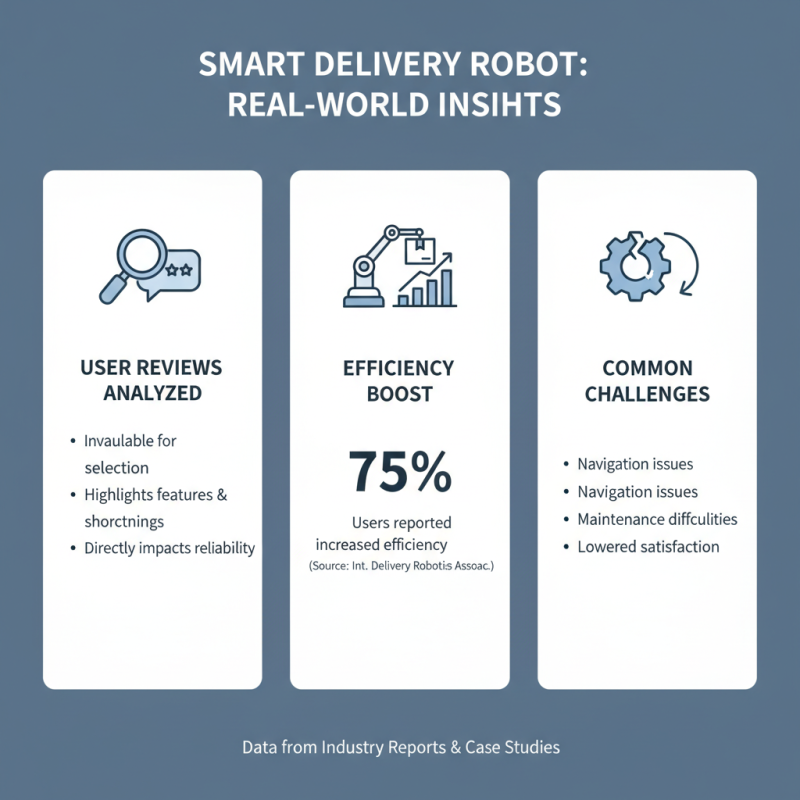
When selecting a smart delivery robot for your business, analyzing user reviews proves invaluable. Many companies share insights that highlight features and shortcomings. Reports indicate that user satisfaction can directly impact robot reliability. A study by the International Delivery Robotics Association revealed that 75% of users reported increased efficiency after deploying delivery drones or robots. Yet, not all experiences were positive. Some users faced challenges with navigation and maintenance, which affected overall satisfaction.
It's crucial to consider the feedback on ease of use and customer support. A robust support system can make a substantial difference. Users often mention the need for timely assistance when technical issues arise. In contrast, robots that are user-friendly tend to garner positive feedback. Look for reviews that discuss real-world applications, as these can clarify both advantages and drawbacks.
Tips: Test delivery robots in your specific environment before making a decision. Consider factors like size and layout. Gathering input from users of various models can also provide meaningful insights. Incorporate lessons from others who use automation, including devices like the Smart Lawn Mower. Their experiences can help you avoid potential pitfalls.
Remember, not all robots perform equally well in open spaces or tight locations. Test their adaptability to ensure your chosen option fits your business needs.
Future Trends in Smart Delivery Robotics for Business Applications
The rise of smart delivery robots is reshaping business logistics. Trends indicate that the global market for delivery robots will reach $1.9 billion by 2027. Companies are increasingly adopting these technologies to enhance operational efficiency.
Several factors influence the evolution of smart delivery robotics. Consumer demand for faster services drives innovation. A study shows that 75% of consumers prefer delivery within two hours. However, managing expectations remains a challenge. Not all businesses can provide rapid delivery solutions.
The integration of AI and machine learning is another key trend. These technologies improve navigation and route optimization. Data from research indicates that smart delivery robots can reduce delivery costs by up to 30%. Yet, reliability issues must be addressed. Deliveries can fail due to unforeseen obstacles, raising concerns about implementation. As businesses explore this technology, balancing speed and reliability will be crucial.
Exploring the Features and Benefits of China's Intelligent Interactive Companion Robot: A Versatile Innovation for Modern Living
In the realm of modern living, China's intelligent interactive companion robot is an innovative marvel that seamlessly integrates technology with daily life. This three-in-one product offers a unique blend of AI companionship, self-balancing mobility, and charming design, creating a versatile solution tailored to the needs of contemporary consumers. At its core, it is designed to enhance the user's lifestyle, whether by providing companionship on leisure walks, assisting during exercise routines, or serving as a smart housekeeper carrying groceries and personal items.
What sets this intelligent robot apart is not just its functionality but also its delightful aesthetics, featuring an adorable panda design equipped with LED emotional expression interactions. This charming appearance transforms it from a mere gadget into a lovable family member, capable of engaging in emotional exchanges that create a deeper bond with users. Its multi-faceted capabilities extend beyond being a simple mobility device; it acts as your personal health advisor, making your active lifestyle more enjoyable while ensuring the safety of your beloved pets through its reliable presence.
The concept of silicon-based life embodied in this innovative robot highlights its potential for growth and exploration alongside its human companions. As part of a forward-thinking initiative, this product signifies a new era of intelligent devices that enhance both convenience and companionship in everyday life. By embracing such advancements, users can look forward to a future where technology not only supports but enriches the human experience.
FAQS
: Consider initial investment, maintenance costs, and software integration. Ongoing expenses can impact overall cost-effectiveness.
They may reduce labor costs and enhance delivery efficiency, leading to potential savings for businesses.
Frequent malfunctions can frustrate staff and customers. Not every implementation may meet expectations.
Consumer demand for faster services is a major driving force behind the technology's adoption.
AI enhances navigation and route optimization, which can lead to cost reductions in delivery.
Not all businesses can meet quick delivery demands, making it essential to manage customer expectations effectively.
Predictions suggest a significant increase, reaching $1.9 billion by 2027, driven by evolving consumer needs.
Balancing speed with reliability is critical, as unforeseen obstacles can hinder delivery success.
User experiences illustrate both benefits and challenges, highlighting the need to reflect on technology's impact.
Reliability concerns can arise when obstacles disrupt the delivery process, requiring careful consideration.
Conclusion
In the evolving landscape of business operations, the adoption of Smart Delivery Robots is becoming increasingly relevant. These advanced robots offer numerous key features and benefits, such as efficient parcel delivery and enhanced customer service, which are crucial for modern enterprises. To successfully integrate this technology, it is essential for businesses to assess their specific delivery needs, compare various types of smart delivery robots available in the market, and evaluate their cost-effectiveness and potential return on investment.
Moreover, ensuring that these delivery robots are compatible with existing business systems is vital for seamless operation. Analyzing user reviews and case studies can provide valuable insights into real-world applications, helping businesses make informed decisions. As smart delivery robotics continues to evolve, staying abreast of future trends will further enhance the potential for these systems in transforming delivery logistics and operational efficiency.