As we head into 2026, the world of Industrial Mobile Robots is changing pretty fast. I mean, experts like Dr. Jane Thompson from Robotics Innovations really emphasize that, 'The future of industrial operations depends a lot on mobile robots.' It’s clear these machines are going to play a huge role in boosting efficiency and cutting down on human labor on factory floors.
Figuring out which industrial mobile robots are the best fit isn’t always straightforward though. You’ve gotta look at things like what tasks they need to handle, how well they adapt to different environments, and how easily they can be integrated with existing systems. Honestly, a lot of businesses find themselves caught in that tricky spot—trying to balance costs with all those advanced features can get pretty overwhelming.
Now, investing in these robots isn’t just some passing trend anymore; it’s pretty much a must if companies want to stay competitive. But here’s the thing—it's really important to stay alert about mismatches between what you need and what the robots can actually do. Having a solid partnership with experienced suppliers can make all the difference as you navigate this rapidly changing landscape.
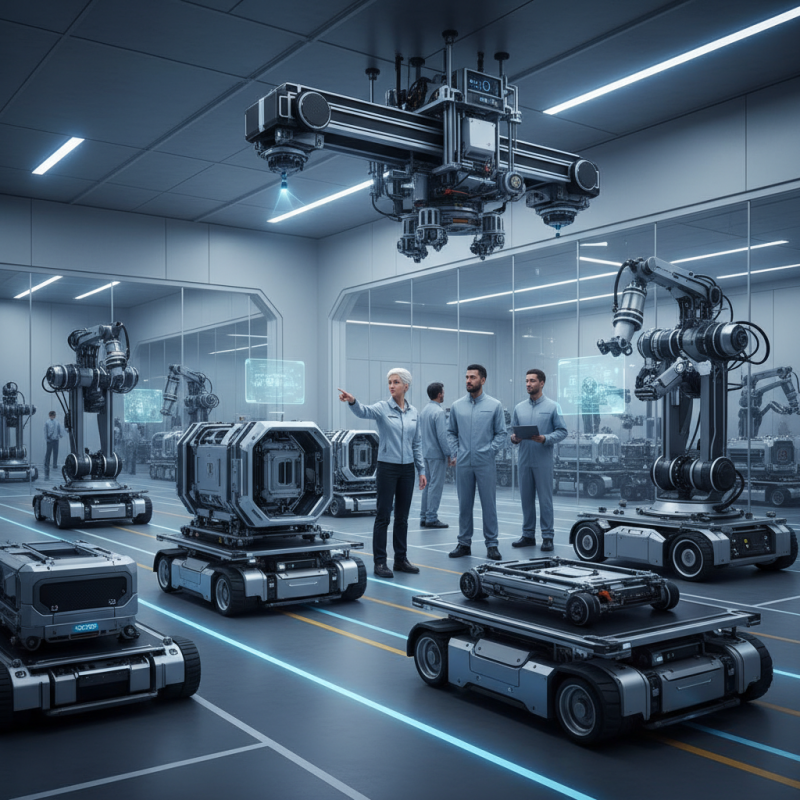
Understanding the Types of Industrial Mobile Robots Available in 2026
In 2026, understanding the types of industrial mobile robots is crucial for effective decision-making. The landscape includes diverse options such as Automated Guided Vehicles (AGVs), autonomous mobile robots (AMRs), and collaborative robots (cobots). According to a recent industry report, the market for industrial mobile robots is projected to grow at a compound annual growth rate of 25% over the next five years. This surge highlights the importance of knowing the right type for your operations.
When considering Industrial Agvs, evaluate their navigation systems. Many use magnetic strips or optical guidance. However, some newer models leverage advanced sensors and AI for greater autonomy. It’s vital to align the robot's features with your warehouse layout and workflow requirements. For example, AMRs excel in dynamic environments with frequent changes. Choose based on your specific demands rather than general trends.
Tip: Always prioritize safety features in your selection. Effective obstacle detection and emergency stop systems can prevent operational hazards. Engage your team in discussions about potential pain points and challenges. This feedback loop might reveal issues in existing processes that robots could enhance. Remember, the integration of any robot should consider both immediate efficiency and long-term adaptability.
How to Choose the Best Industrial Mobile Robots in 2026? - Understanding the Types of Industrial Mobile Robots Available in 2026
| Type of Industrial Mobile Robot |
Key Features |
Typical Applications |
Max Load Capacity |
Navigation Technology |
| Automated Guided Vehicles (AGVs) |
Simple operations, pre-defined routes |
Material handling, assembly line transport |
Up to 2000 kg |
Magnetic tape, laser-based |
| Autonomous Mobile Robots (AMRs) |
Dynamic pathfinding, obstacle avoidance |
Warehouse logistics, retail delivery |
Up to 800 kg |
LiDAR, vision systems |
| Collaborative Robots (Cobots) |
Safety features, ease of programming |
Assembly, packaging, quality inspection |
Up to 200 kg |
Sensor-based, smart algorithms |
| Shuttle Robots |
High-speed operation, space efficiency |
Storage systems, automated retrieval |
Up to 500 kg |
Mapping, RF identification |
Key Features to Evaluate When Selecting an Industrial Mobile Robot
When evaluating industrial mobile robots in 2026, consider their navigation capabilities.
Robots equipped with advanced LiDAR systems can map surroundings effectively. This technology offers precision,
allowing robots to navigate complex environments with ease. Look for robots that can adapt to changing spaces.
Flexibility is vital as operations evolve.
Another crucial feature is payload capacity. Different industries require varying levels of transport capability.
Some robots can carry significant loads across long distances, while others might focus on smaller, delicate items.
Ensure the robot's design aligns with your operational needs.
Not enough power can lead to inefficiencies.
Safety is paramount when selecting Ai Robots.
Features like obstacle detection and emergency stop buttons cannot be overlooked.
Collaborating with human workers raises safety standards. The integration of safety systems enhances reliability.
During trials, observe how well the robot responds to unexpected obstacles.
Reflection on past failures can guide future purchases.
Assessing Your Industry-Specific Needs and Applications
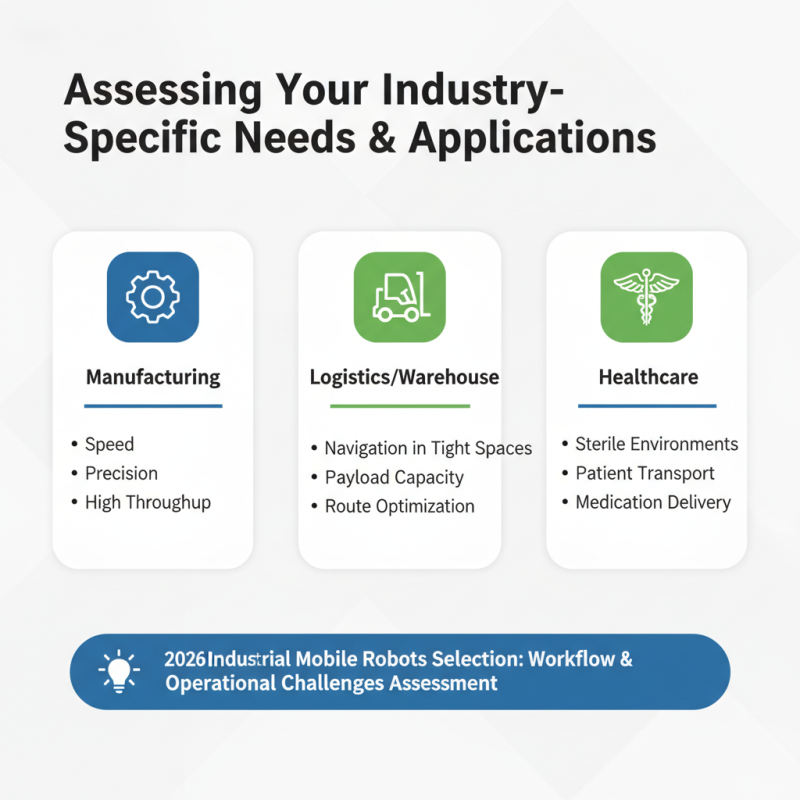
When selecting industrial mobile robots in 2026, understanding specific industry needs is crucial. Different sectors, such as manufacturing, logistics, and healthcare, have unique requirements. For instance, a manufacturing facility may prioritize speed and precision, while a warehouse might focus on navigating tight spaces. An initial assessment of workflow and operational challenges can guide the selection process effectively.
Look into the types of tasks these robots will perform. Robots Ai can excel in repetitive tasks that require consistency, such as assembly or sorting. However, they may struggle in environments that demand high adaptability. Reflecting on the robot's limitations can help avoid costly mistakes. For example, an unsuitable choice could lead to downtime or increased operational costs.
Consider the integration with existing systems. Industrial mobile robots should complement current technology. This might involve ensuring compatibility with equipment and software. However, complexities in integration may arise. Not all robots Ai are designed for easy, seamless compliance with various systems. Evaluating these options can lead to better outcomes for your specific applications.
Evaluating the Robot's Navigation and Mapping Capabilities
When evaluating industrial mobile robots in 2026,
navigation and mapping capabilities are crucial.
Organizations will increasingly rely on autonomous systems to optimize operations.
According to a recent report from the International Federation of Robotics,
effective navigation can reduce operational costs by up to 30%.
This statistic underscores the importance of selecting robots with advanced capabilities in
dynamic environments.
Robots must navigate complex spaces while avoiding obstacles efficiently.
Sensor fusion technology plays a vital role here.
A robot equipped with LiDAR along with visual cameras can map its surroundings more accurately.
Such robots can create real-time, three-dimensional maps, offering a significant advantage in
logistics and manufacturing settings.
For instance, studies show that robots using simultaneous localization and mapping (SLAM) can achieve
an accuracy rate exceeding 95% in familiar environments.
However, challenges remain. Environmental variations can affect
navigation performance significantly. Robots may struggle with changes in lighting or unexpected obstacles.
Continuous improvements are essential in robotics to address these issues.
The reliance on artificial intelligence for adaptive navigation strategies shows promise,
but more data is necessary for fine-tuning. Taking a close look at these
factors can aid in choosing the right robotic solutions for your industry.
Comparing Cost and Return on Investment for Different Models
When choosing industrial mobile robots, cost and return on investment (ROI) are key factors. Companies often overlook hidden costs. These can impact your budget significantly. Maintenance, training, and deployment can add to the initial purchase price. Before committing, analyze all potential expenses. Comparing various models can uncover different financial implications that aren't immediately visible.
ROI can be challenging to measure. It’s not just about upfront costs. Consider how each robot improves efficiency. Look at the tasks assigned to these Home Robots. A robot that reduces labor costs may not always be the cheapest option. Evaluate productivity gains and how quickly investment returns are realized. If a robot enhances operational speed, that may justify a higher cost.
Understand the long-term effects of your investment. Some models may require more frequent updates, impacting future budgets. The best choice balances cost and operational benefits. Research extensively before making a decision. Engage with peers in your industry to gain insights. Reliable feedback can guide you in evaluating your options effectively.
Comparison of Industrial Mobile Robots: Cost vs. ROI in 2026
This chart compares the cost and return on investment (ROI) for five different models of industrial mobile robots in 2026. The costs vary, while the ROI demonstrates the percentage returns businesses might expect from investing in each model.
Considering Maintenance, Support, and Integration Factors
When evaluating industrial mobile robots for 2026, maintenance is crucial.
A robot's upkeep can significantly impact operational efficiency. Look for models that offer easy access to parts.
Modular designs can simplify repairs. This
reduces downtime and keeps productivity on track. Regular maintenance should be straightforward.
Complicated processes can lead to service delays.
Support is another vital factor. Not all suppliers provide equal assistance. Check for robust customer service options.
A solid support system includes training programs and troubleshooting resources.
Access to updated information can also enhance usage.
Is the support responsive?
Slow response times can create frustration for operators.
Integration is essential, too. The robot must work seamlessly with existing systems. Poor integration can lead to inefficiencies and errors. Compatibility affects workflow.
Consider the complexity of connecting new tech to older systems. A flexible approach can ease this challenge.
As technology evolves, so must our strategies for implementation.
Are we ready to adapt?
Future Trends and Innovations in Industrial Mobile Robotics to Watch
The field of industrial mobile robotics is experiencing swift advancements. By 2026, the market is projected to reach $9 billion, highlighting the growing demand for automation in various sectors. A recent report by MarketsandMarkets indicates that the deployment of mobile robots can increase warehouse efficiency by up to 50%. This data underlines the necessity for businesses to stay updated on emerging trends.
Key innovations on the horizon include improved navigation systems. Advancements in LiDAR and computer vision will enable robots to navigate complex environments more effectively. Moreover, Internet of Things (IoT) integration will facilitate real-time data exchange between mobile robots and other systems. This connectivity will enhance operational transparency and decision-making.
However, challenges remain. Companies must address safety concerns as robots work alongside human employees. The potential for job displacement also raises ethical questions. Organizations should incorporate training programs to help employees adapt. As the industry matures, balancing automation with human roles will be crucial for sustainable growth. Keeping an eye on these trends will allow companies to make informed decisions when selecting the best industrial mobile robots in 2026.
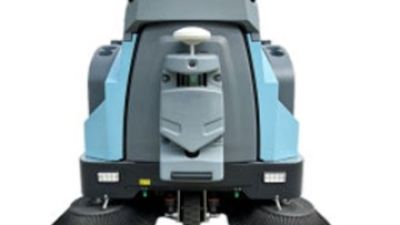
Innovative AI-Driven Industrial Cleaning Robots: Revolutionizing Outdoor Sweeping Solutions in China
The landscape of public space maintenance is undergoing a significant transformation with the introduction of innovative AI-driven industrial cleaning robots. Specifically designed for outdoor sweeping applications, these advanced robots are reshaping how cities in China maintain their public areas. By harnessing the power of artificial intelligence, these robots offer a comprehensive solution that combines deep environmental perception, intelligent decision-making, and operational efficiency, responding to the complex demands of urban cleanliness.
These state-of-the-art street cleaning robots are mobile platforms that operate seamlessly in enclosed and semi-enclosed outdoor spaces. Their design emphasizes sustainability and quantifiable performance, allowing for standardized cleaning solutions that adapt to various urban environments. As cities continue to grow and evolve, these AI-powered robots ensure that public spaces remain pristine, effectively removing debris and pollutants while minimizing environmental impact. The future of outdoor cleaning looks promising, with these technological advancements poised to deliver unparalleled levels of cleanliness and efficiency in urban maintenance.
FAQS
: The main types are Automated Guided Vehicles (AGVs), autonomous mobile robots (AMRs), and collaborative robots (cobots).
AGVs often use magnetic strips or optical guidance. Some newer models use sensors and AI for navigation.
Choosing the right type aligns with your warehouse layout and specific operational demands.
Safety features like obstacle detection and emergency stops are critical. Engage your team for insights on challenges.
Maintenance is crucial for efficiency. Models with easy access to parts and modular designs reduce downtime.
Check for reliable customer support, training programs, and troubleshooting resources. Fast responses can minimize frustration.
Effective integration with existing systems is essential. Poor integration can cause inefficiencies and operational errors.
We need to assess if our strategies for implementation are adaptable. Is our team ready for new technologies?
Consider both immediate efficiency and how the robots will fit into future workflows and technologies.
Challenges may arise from compatibility issues with older systems. A flexible approach can help overcome these obstacles.
Conclusion
In 2026, selecting the best Industrial Mobile Robots requires a comprehensive understanding of the various types available on the market. Key features should be evaluated, including navigation and mapping capabilities, which are essential for efficient operation in diverse environments. It's crucial to assess industry-specific needs and applications, ensuring that the chosen robot aligns with the operational demands of specific sectors.
Additionally, comparing cost and return on investment for different models is vital to maximize budget efficiency. Factors such as maintenance, support, and ease of integration into existing workflows should also be considered. As trends and innovations in industrial mobile robotics continue to evolve, keeping an eye on emerging technologies will help businesses stay competitive and make informed decisions when investing in these advanced solutions.