In the fast-changing world of food delivery, the arrival of Delivery Food Robots has definitely stirred up a mix of excitement and skepticism. Dr. Emma Lin, a top researcher at Future Tech Analytics, points out, “Efficiency only comes into play when we really understand what our Delivery Food Robots can and can’t do.” Her words make us pause and think about how these machines might fit into our everyday routines.
As more restaurants and delivery companies start using these robots, it’s super important to make the most of their capabilities. But let’s be real — there are some tricky bits. Navigating busy streets or crowded spaces can be a real headache for these bots. Plus, keeping the food hot enough during delivery is still a bit of a challenge. Thinking about these issues helps spark ideas for better designs and smarter solutions.
Ultimately, the success of Delivery Food Robots hinges on us humans keeping an eye on things and planning carefully. Businesses need to tackle challenges like engaging with customers and making sure people are on board with the tech. When practices are fine-tuned and real-world use is kept in mind, restaurants can offer a smoother, more seamless experience. If done right, these robots could really shake up the way food gets delivered and change the game for good.
Understanding the Functionality of China Wholesale Delivery Food Robots
China wholesale delivery food robots are revolutionizing the way food is delivered. Understanding their functionality is crucial for optimizing their use. These robots operate using advanced navigation systems, allowing them to move smoothly through crowded areas. This feature enhances efficiency and minimizes delivery time. The robots can be programmed to adjust their routes based on real-time traffic data. This adaptability is key for successful operations.
However, challenges exist in ensuring consistent performance. For instance, while these robots are equipped to avoid obstacles, unexpected occurrences can disrupt their path. Regular maintenance is crucial to keep them operating effectively. Users must also ensure that the robots are correctly charged and free of debris, which can impact their function. Despite their high-tech design, they need constant monitoring.
The versatility of delivery robots is noteworthy. They can handle various types of orders, from small snacks to larger meals. Understanding their load capacity can help businesses maximize their efficiency. Yet, using them effectively requires careful planning and adjustment. No system is perfect, and adapting to customer needs is essential. Continuous evaluation and feedback are necessary to enhance their roles.
Top 5 Tips for Using China Wholesale Delivery Food Robots Effectively
Identifying Key Features for Maximizing Efficiency in Food Delivery
When adopting Ai Delivery Robots for food delivery, understanding their key features is crucial. The efficiency of these robots hinges on factors such as navigation technology, battery life, and load capacity. A study by the National Restaurant Association indicates that 56% of consumers prefer restaurants that utilize technology for convenience. This insight highlights the importance of efficient delivery systems.
Robots equipped with advanced GPS and LIDAR systems can navigate complex environments. This capability reduces delivery times and minimizes human errors. Industry reports predict that companies utilizing AI in logistics could see a 20% increase in efficiency. However, not all robots perform equally. Some may struggle in crowded areas, impacting overall performance.
Battery life is another critical aspect. A robot that needs frequent recharging can disrupt service flow. Many models currently on the market provide around 4-6 hours of operation, which may not meet high-demand periods. Users must evaluate their delivery needs against the robot's capabilities. While Ai Delivery Robots offer promise, they are not without challenges. Continuous assessment ensures optimal use.
Tips for Streamlining Communication with Food Delivery Robots
Effective communication is crucial when using food delivery robots. Clear instructions help ensure that these robots navigate successfully to their destinations. When placing orders, be explicit about the delivery location. A small miscommunication can lead to delays and frustrated customers. Using detailed descriptions or landmarks can significantly improve the accuracy of deliveries.
Consider the user interface of the robot's software. A simple, intuitive design enhances user experience. However, not all users are tech-savvy. Training staff on how to interact with the robots can alleviate user frustration. Observe how your team engages with the technology and refine the process as necessary. It’s essential to gather feedback regularly. This can highlight areas for improvement.
Another vital aspect is to keep communication tools accessible. Utilize chat features, allowing users to ask questions in real-time. Often, users may feel uncertain about the robot's functions or status. Providing them with a way to communicate can build trust and reliability. How well these tools are used can impact overall satisfaction. Implementing these strategies will help create a smoother delivery experience.
Best Practices for Navigation and Routing Optimization
Optimizing navigation and routing for food delivery robots can greatly enhance efficiency. To achieve this, using advanced mapping technologies is crucial. These technologies help
Mow Robots understand their environment. Through effective mapping, robots can avoid obstacles and adapt to changes in real-time.
Another essential practice is to regularly update the routing algorithms based on delivery feedback. This ensures that the Mow Robot continuously improves its path selection. Gathering data from previous deliveries will help identify patterns and potential bottlenecks. Adjusting routes based on this information can lead to faster and more reliable service.
However, it’s important to test these optimizations in diverse environments. Not all situations are identical. Some routes may perform well in one area but poorly in another. Continuous assessments and adjustments are necessary to maintain reliability. It's essential to acknowledge that perfection is unattainable; every system has its flaws, and learning from them is vital.
Maintaining Food Quality and Safety During Delivery Processes
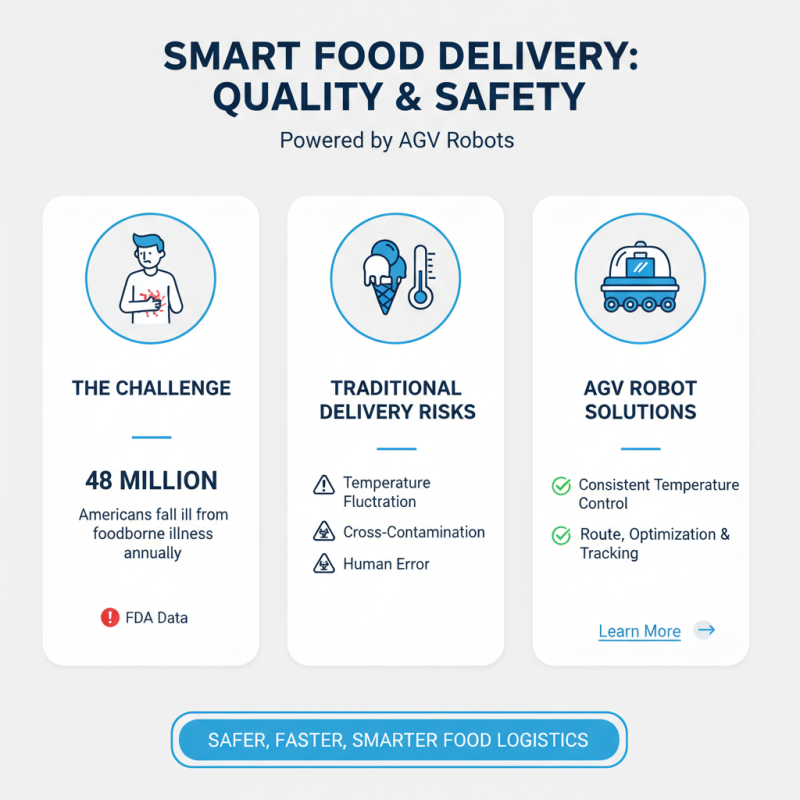
In the rapidly evolving food delivery landscape, maintaining food quality and safety during delivery processes is crucial. Data from the Food and Drug Administration indicate that nearly 48 million Americans fall ill from foodborne illnesses each year. Such statistics underscore the importance of effective delivery methods, particularly when using innovative solutions like Agv Robots. These automated guided vehicles streamline logistics but must prioritize safety.
To ensure food safety, proper temperature controls are vital. Research shows that food temperature must remain above 140°F or below 40°F to minimize bacterial growth. AGV robots can be equipped with temperature-sensitive sensors that monitor and adjust conditions in real-time. However, challenges remain. If these robots encounter delays or obstacles, temperature deviations can occur. Regular maintenance and precise programming are essential for optimal performance.
Furthermore, cleanliness is another area of concern. The National Restaurant Association emphasizes the need for stringent sanitation practices. AGV robots should be designed for easy cleaning and be made from materials that resist bacterial growth. Despite advancements, some operators have faced issues with dirt accumulation, urging companies to reassess their hygiene protocols. Importantly, the human element remains significant; training staff to work alongside these robots is critical for a seamless operation.
Training Staff to Effectively Work with Delivery Food Robots
The integration of delivery food robots into service teams can optimize efficiency. However, training staff is crucial for success. According to recent industry researchers, effective training yields up to a 20% increase in operational efficiency. Staff must understand how to interact with these robots. This knowledge benefits customer experiences and reduces errors.
Regular workshops are essential for staff. They should cover robot functionalities and troubleshooting methods. Engaging with robots can lead to technical issues, causing delays. A study found that 34% of businesses encountered operational disruptions due to insufficient staff training. Addressing these gaps is vital for seamless service.
Additionally, fostering a collaborative environment is necessary. Employees need to feel comfortable discussing challenges with robots. Establishing a culture of open communication can enhance performance. A report highlighted that organizations prioritizing staff input saw a 15% rise in overall productivity. A focus on teamwork can mitigate the potential frustrations with new technology. Training is not just about technology; it's about building confidence.
Evaluating the Performance and Impact of Food Robots on Operations
The rise of food robots in the delivery sector is transforming operations. These machines streamline the process but evaluating their performance is crucial. Assess how they impact customer satisfaction and employee productivity in real-time. Analyze metrics, such as delivery speed and accuracy, to understand their effectiveness.
When employing China wholesale delivery food robots, consider their integration into existing workflows. Train staff to work alongside these machines, ensuring efficiency. Communication is key. Encourage workers to provide feedback on the robots' performance. This insight can help refine processes and address any shortcomings.
Implementing data analytics can enhance your understanding of operational impact. Tracking key performance indicators will shed light on areas needing improvement. Evaluate the speed of service and delivery times regularly. Tools like a Lawn Robot can automate repetitive tasks, yet their presence shouldn't compromise human interaction. Balancing technology and personal touch is essential for success in the food delivery industry.
Global Market Trends and Projections for Intelligent Interactive Companion Robots: Insights from Recent AI and Mobility Reports
As the demand for intelligent interactive companion robots continues to rise, recent reports indicate a significant shift in market trends towards AI-enhanced mobility solutions. The global AI companion market is projected to grow substantially, driven by increasing consumer interest in robots that can provide companionship while also fulfilling functional roles. The integration of self-balancing mobility not only enhances the versatility of these robots but also appeals to consumers looking for practical and engaging solutions in their everyday lives.
Our innovative three-in-one product exemplifies these trends, offering a delightful combination of AI companionship, self-balancing mobility, and an adorable design that captures the hearts of users. Equipped with LED emotional expressions, our charming panda-shaped device transforms from a traditional mechanical product into a beloved family member. Whether accompanying you on shopping trips or daily walks, it fosters a sense of connection and joy, proving that technology can seamlessly blend with emotional engagement.
Moreover, the multifunctionality of this product extends beyond companionship. It serves as a health advisor during physical activities and as a smart housekeeper, adept at carrying items and watching over pets. With insights from recent AI and mobility reports pointing towards a burgeoning market for AI companions capable of both emotional and practical support, our device is positioned to meet and exceed the expectations of consumers seeking more than mere utility. As we continue to explore the potential of AI and robotics, products like ours are well-equipped to lead the charge in transforming daily routines into extraordinary experiences filled with joy and functionality.
FAQS
: Important features include navigation technology, battery life, and load capacity.
Advanced GPS and LIDAR help robots navigate complex areas, reducing delivery times.
Short battery life can interrupt service. Many robots operate for only 4-6 hours.
Optimizing routes helps robots avoid obstacles and adapt quickly to changes.
Regular updates improve path selection based on past deliveries and feedback.
No, some routes may succeed in certain areas but fail in others.
Users must evaluate delivery needs, robot capabilities, and performance regularly.
Different environments may affect how well a robot performs on specific routes.
No system is perfect; flaws exist, and learning from them is essential.
While promising, they may struggle in crowded areas and require continuous evaluation.
Conclusion
The article "Top 5 Tips for Using China Wholesale Delivery Food Robots Effectively" provides valuable insights into optimizing the use of delivery food robots in food service operations. It begins by outlining the essential functionalities of these robots, emphasizing the importance of understanding their features to maximize efficiency in food delivery. Key strategies are discussed, such as streamlining communication between staff and robots, which can enhance operational flow and reduce delays.
Moreover, the article highlights best practices for navigation and routing optimization to ensure timely delivery while maintaining food quality and safety. It also addresses the significance of training staff to work collaboratively with delivery food robots effectively. Finally, evaluating the robots' performance and their impact on overall operations is crucial for continuous improvement and ongoing success in the use of this innovative technology in food delivery.