Lately, we've been seeing a pretty big shift towards automation in warehouses, especially with more and more companies jumping on the bandwagon with driverless forklifts. According to a report from the International Federation of Robotics, using autonomous gear in logistics could bump up efficiency by as much as 30%. Honestly, these tech solutions are pretty game-changing — they help get things done faster and cheaper, which makes them super appealing for businesses looking to stay competitive.
And it’s not just about speeding things up. Driverless forklifts also help cut down on human mistakes. OSHA’s studies show that managing risks in material handling is really important, and automating stuff definitely makes the workplace safer overall. Of course, it’s not just a plug-and-play situation — companies need to think about their existing setup and make sure their staff are properly trained to get the most out of these new systems.
Switching over to driverless forklifts isn’t just a flip of a switch though — it takes some strategic planning. Supply chain pros really need to weigh the pros and cons, considering potential hiccups during the transition. It’s all about finding the right balance: embracing the efficiency boost while making sure everything runs smoothly during the changeover. That way, they can truly unlock the full potential of autonomous forklifts without running into major issues.
Top 5 Reasons to Choose Driverless Forklifts for Efficiency
In today’s fast-paced warehouse environment, efficiency is critical. Driverless forklifts can drastically improve operations. These machines navigate autonomously, reducing human error. They handle repetitive tasks with precision and speed. This boosts productivity and lowers operational costs. Time spent on manual tasks is minimized, allowing staff to focus on higher-level duties.
Adopting driverless technology may raise concerns. The initial investment can be daunting. Some may worry about integrating these systems into existing workflows. Training employees to work alongside these forklifts requires careful planning. However, these challenges often lead to significant long-term gains. The increased throughput can outweigh initial fears.
Many industries have seen positive changes. For example, manufacturing facilities report enhanced safety and efficiency. Robotic forklifts reduce accidents and improve inventory management. Workers can establish a safer environment while technology manages the heavy lifting. While adjustments are necessary, the benefits of driverless forklifts become evident over time. Reliable automation is the future of logistics.
Top 5 Reasons to Choose Driverless Forklifts for Efficiency
| Reason |
Description |
Efficiency Impact |
| Increased Safety |
Driverless forklifts reduce the risk of workplace accidents by eliminating human error. |
High |
| Cost Savings |
Lower operational costs from reduced labor and fewer accidents mean higher overall savings. |
Medium |
| Improved Productivity |
Constant operation without breaks leads to enhanced workflow and faster completion of tasks. |
High |
| Space Optimization |
Driverless forklifts can navigate tighter spaces and use vertical storage more efficiently. |
Medium |
| Data Integration |
Seamless data collection and analysis help optimize logistics and inventory management. |
High |
Increased Operational Efficiency Through Automation in Warehousing
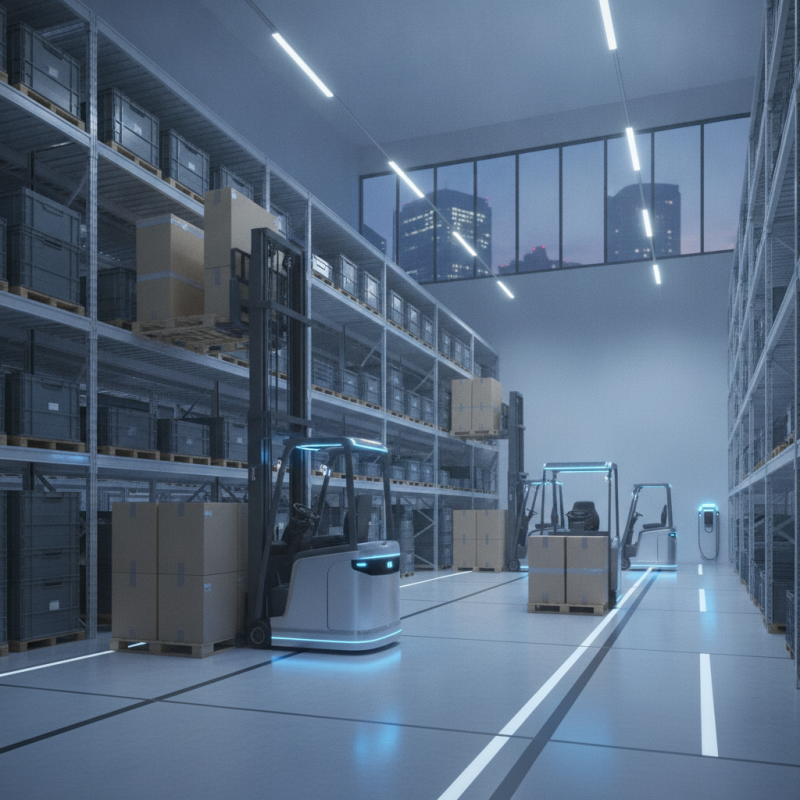
Driverless forklifts are revolutionizing warehousing operations. Automation significantly boosts efficiency by minimizing human errors and optimizing space. These advanced machines can navigate complex environments, ensuring goods move swiftly. This level of precision leads to fewer accidents and reduced downtime.
Tips: Regularly maintain your driverless forklifts. This practice ensures they operate at peak efficiency and extend their lifespan. Routine checks can prevent unexpected failures that may disrupt operations.
Embracing automation does come with challenges. Training staff to work alongside these machines can take time. Resistance to change is common in many workplaces. However, investing in training can lead to smoother transitions, enhancing overall productivity.
Tips: Encourage open communication about technology changes. Employees who understand the benefits are more likely to support new initiatives. Engaging your team can create a collaborative atmosphere focused on efficiency.
Reduction in Labor Costs with Driverless Forklifts in Logistics
The logistics industry is evolving rapidly, with driverless forklifts taking center stage. Labor costs are a significant concern for many organizations. A report by McKinsey indicates that automating warehouse operations can reduce labor costs by up to 50%. This statistic is compelling for businesses considering driverless forklifts.
Driverless forklifts not only streamline operations but also enhance safety. Human error accounts for a large percentage of workplace accidents. By employing autonomous vehicles, companies can minimize these risks. A study from the National Safety Council suggests that automation could decrease workplace injuries by over 20%. It's essential for organizations to weigh the initial costs against long-term benefits.
Tips for integrating driverless technology include thorough training for staff on surrounding operations. Regularly assess the performance to ensure efficiency gains are realized. Monitoring key performance indicators can provide insights into any areas needing improvement. Embracing these technologies, similar to the rise of Driverless Lawn Mowers, offers a pathway toward increased productivity. Pay attention to both the benefits and challenges associated with these innovations.
Enhanced Safety Protocols and Reduced Accident Rates in Work Environments
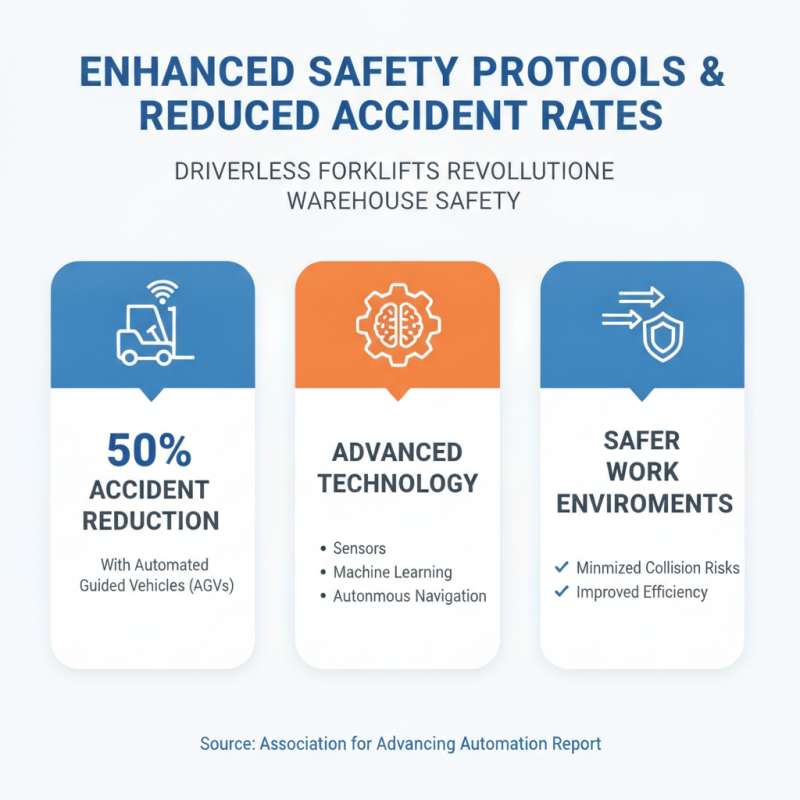
In recent years, the implementation of driverless forklifts has significantly transformed warehouse operations, particularly in enhancing safety protocols. According to a report by the Association for Advancing Automation, workplaces utilizing automated guided vehicles (AGVs) have recorded a 50% reduction in accident rates. These forklifts are equipped with advanced sensors and machine learning, allowing them to navigate safely and efficiently without human intervention. This technology minimizes collision risks, leading to safer working environments.
Despite these advancements, there are still challenges worth noting. While driverless forklifts improve safety, they require a careful integration into existing workflows. Businesses must ensure proper training for their staff to adapt to the new technology. Miscommunication in transitioning from manual to automated systems can create safety gaps. Furthermore, a reliance on technology can lead to complacency, increasing vulnerabilities in emergency scenarios.
Moreover, studies suggest that 30% of workplace injuries are due to human error. By adopting Forklift Agv, organizations can mitigate these risks. Yet, it's crucial to maintain ongoing risk assessments to ensure that the safety measures in place are effective. Continuous monitoring and improvement can help address potential oversight in safety protocols. This blend of technology and vigilant human oversight is essential to maximize the benefits of automation in industrial settings.
24/7 Operational Capability of Driverless Forklifts for Maximum Productivity
Driverless forklifts have revolutionized warehouse operations, allowing for continuous work without human limitations. Unlike traditional forklifts, which rely on operators, these autonomous machines can run 24/7. This capability significantly increases productivity, ensuring tasks are completed regardless of shift changes or employee absenteeism.
With driverless forklifts, efficiency reaches new heights. These robots can operate in diverse environments, handling various loads with precision. Imagine a fully stocked warehouse, where pallet movements happen seamlessly. Employees can focus on strategic tasks rather than the physical demands of driving. However, it’s crucial to train staff to work alongside these machines. The human-robot collaboration is vital for maintaining safety and workflow.
Challenges remain in fully integrating Robot Forklifts into existing systems. Companies must invest in infrastructure and training. Consideration should also be given to maintenance schedules. Regular upkeep of these machines ensures longevity and optimal performance.
Embracing this change requires careful planning but can lead to significant efficiency gains in the long run.
Integration of Advanced Technology: AI and Sensors in Forklift Systems
Driverless forklifts are revolutionizing warehouse efficiency through the integration of advanced technologies like
artificial intelligence (AI) and sensors. These systems leverage sophisticated algorithms to navigate complex environments autonomously.
According to a report from the International Warehouse Logistics Association, implementing
Unmanned Forklifts
can reduce operational costs by up to 25%. This is attributed to decreased labor costs and minimized human error.
Sensors play a critical role in these vehicles, allowing them to detect obstacles and changes in their environment in real time.
These forklifts utilize LiDAR and cameras to create a map of their surroundings. This technology enables
precise movements and reduces the risk of accidents. A study by ResearchAndMarkets highlighted that integrating
AI in logistics can enhance routing efficiency by as much as 30%. Yet, operators must ensure regular updates and maintenance of these AI systems.
Despite these advancements, the transition to unmanned forklifts presents challenges. Workers may feel apprehensive about job security. Therefore, companies should
focus on re-skilling employees to work alongside these technologies. Addressing these concerns is essential for a
smooth integration process and maintaining workplace morale. This balance of technology and human oversight
is vital for maximizing the benefits of driverless forklifts.
Boosting Inventory Management Efficiency with Autonomous Forklifts
Autonomous forklifts are reshaping inventory management. They provide precise and efficient operations in warehouses and production facilities. According to a report by Prologis, companies investing in robotics, such as driverless forklifts, can increase their operational efficiency by up to 30%. This is crucial in a time when inventory management accuracy is paramount.
Integrating autonomous forklifts can streamline inventory handling. These systems minimize human error, which studies show can account for 70% of inventory discrepancies. A research snapshot from the Warehouse Innovation Institute highlighted that companies utilizing autonomous equipment reported a 15% reduction in inventory holding costs. The consistent performance of these machines ensures that stock levels remain accurate and up to date.
However, transitioning to driverless forklifts isn't flawless. Companies often face challenges in tech integration and workforce adjustment. Employees may feel uncertain about job security, leading to potential pushback. It's vital to address these concerns through training and open communication. Balancing efficiency gains with employee engagement remains an ongoing challenge in adopting this technology.
Top 5 Reasons to Choose Driverless Forklifts for Efficiency
This chart illustrates the top 5 reasons for adopting driverless forklifts in inventory management. Each factor contributes to overall efficiency improvements, highlighting the advantages of automation in warehouse operations.
Maximizing Efficiency and Safety with Autonomous Heavy-Duty Forklifts in Modern Warehousing Operations
In modern warehousing operations, maximizing efficiency and safety is paramount, and autonomous heavy-duty forklifts are proving to be revolutionary in achieving these goals. These intelligent handling forklifts harness cutting-edge robotics and AI algorithms, providing a seamless integration of technology and materials management. With their advanced precision control systems, these forklifts can navigate high-density warehouse environments with ease, significantly enhancing operational throughput while ensuring worker safety.
The design of these autonomous forklifts accounts for both capability and adaptability, boasting a robust payload capacity of 2 tons while maintaining a compact width of just 960mm. Such dimensions allow them to maneuver in narrow aisles and confined spaces that are commonly found in busy production lines. This capability not only improves space utilization but also reduces the risk of accidents, as the forklifts can operate autonomously, minimizing human error and providing a safer working environment for all personnel.
As industries continue to evolve towards automation, implementing autonomous heavy-duty forklifts represents a strategic move to streamline operations. By incorporating these next-generation solutions, warehouses can achieve significant gains in efficiency, reliability, and safety, ensuring they remain competitive in a fast-paced market.
FAQS
: Driverless forklifts are machines that navigate autonomously, performing tasks without human operators.
They handle repetitive tasks quickly, reducing human error and maximizing productivity.
The initial investment may be high. Integrating new systems and training staff can be daunting.
They reduce accident rates by using advanced sensors to navigate safely without human intervention.
Regular maintenance is crucial. Routine checks can prevent unexpected failures and extend lifespan.
Proper training helps staff adjust to new technologies, easing the transition and improving productivity.
Yes, complacency may increase vulnerabilities. Ongoing training and assessments are necessary for safety.
They optimize space and ensure goods move swiftly, reducing downtime due to human errors.
Open discussions encourage employee support for new initiatives, fostering a collaborative environment.
Miscommunication during transition can lead to safety gaps. Vigilant monitoring is essential.
Conclusion
Driverless forklifts are revolutionizing the warehousing and logistics sectors by significantly enhancing operational efficiency. Automation in these environments increases productivity by minimizing manual tasks, while the elimination of labor costs allows businesses to allocate resources more effectively. Additionally, driverless forklifts contribute to improved safety protocols, leading to reduced accident rates and safer work environments.
Operating around the clock, driverless forklifts maximize productivity and ensure that inventory management processes are more efficient. The integration of advanced technologies such as AI and sensors allows these autonomous systems to navigate complex environments with ease. By choosing driverless forklifts, companies can transform their operations and achieve greater efficiency in their logistics and warehousing functions.