



0102030405
Commercial Service Robots Are Breaking Out: From Restaurant Delivery to Hotel Cleaning, AI Is Reshaping Our Service Experience
2026-07-15
Rapid Market Growth, Chinese Manufacturers Leading Globally
Commercial service robots, as the name suggests, are service‑oriented robots deployed in public commercial settings such as restaurants, hotels, shopping malls, hospitals, airports, and similar venues. They replace or assist human workers in repetitive, standardised tasks including delivery, cleaning, reception, and guidance. Unlike industrial robots, which focus on manufacturing, commercial service robots directly serve consumers and are closely intertwined with daily life.
According to the latest report from International Data Corporation (IDC), the global commercial service robot market reached US$1.37 billion in 2025, a year‑on‑year increase of 35.7%, with annual shipments totalling approximately 155,000 units, up 44.1% from the previous year. IDC projects that from 2026 to 2030, the global market will continue to grow at a healthy pace, reaching 454,000 units by 2030 and a market size of US$3.17 billion.
Notably, Chinese companies hold a dominant position in the global commercial service robot space. The 2026 Robotics White Paper points out that Chinese manufacturers account for more than 80% of global shipments in this segment. In 2024, Chinese firms represented 85% of worldwide shipments of commercial delivery and cleaning service robots. The white paper also forecasts that the commercial service robot market will expand from approximately RMB 67 billion in 2025 to about RMB 480 billion in 2035, growing more than seven‑fold over the decade.
Core Technologies: Helping Robots “See” the World and “Understand” Commands
The ability of commercial service robots to autonomously perform service tasks relies on three core technologies: environmental perception, motion control, and human‑robot interaction.
Environmental perception acts as the robot’s “eyes” and “ears” – through devices such as LiDAR, depth cameras, and ultrasonic sensors, the robot can “see” its surroundings in real time, identify obstacles, pedestrians, staircases, and more, and then plan safe paths forward. Motion control functions as the robot’s “hands” and “feet” – after perceiving environmental information, the control system calculates the optimal route and drives the robot’s wheels or robotic arms to move, grasp, and perform other actions. Human‑robot interaction serves as the “bridge” between the robot and humans – via voice recognition, touchscreens, facial recognition, and other technologies, the robot can understand user instructions and respond accordingly.
It is the integration of these technologies that enables commercial service robots to operate stably in complex and dynamic commercial environments, handling diverse tasks such as meal delivery, cleaning, and guest reception.
Diverse Application Scenarios, Spanning Catering, Hospitality, Healthcare, and Retail
Today, commercial service robots have found applications across a wide range of industries, including catering, hospitality, retail, healthcare, and industrial sectors.
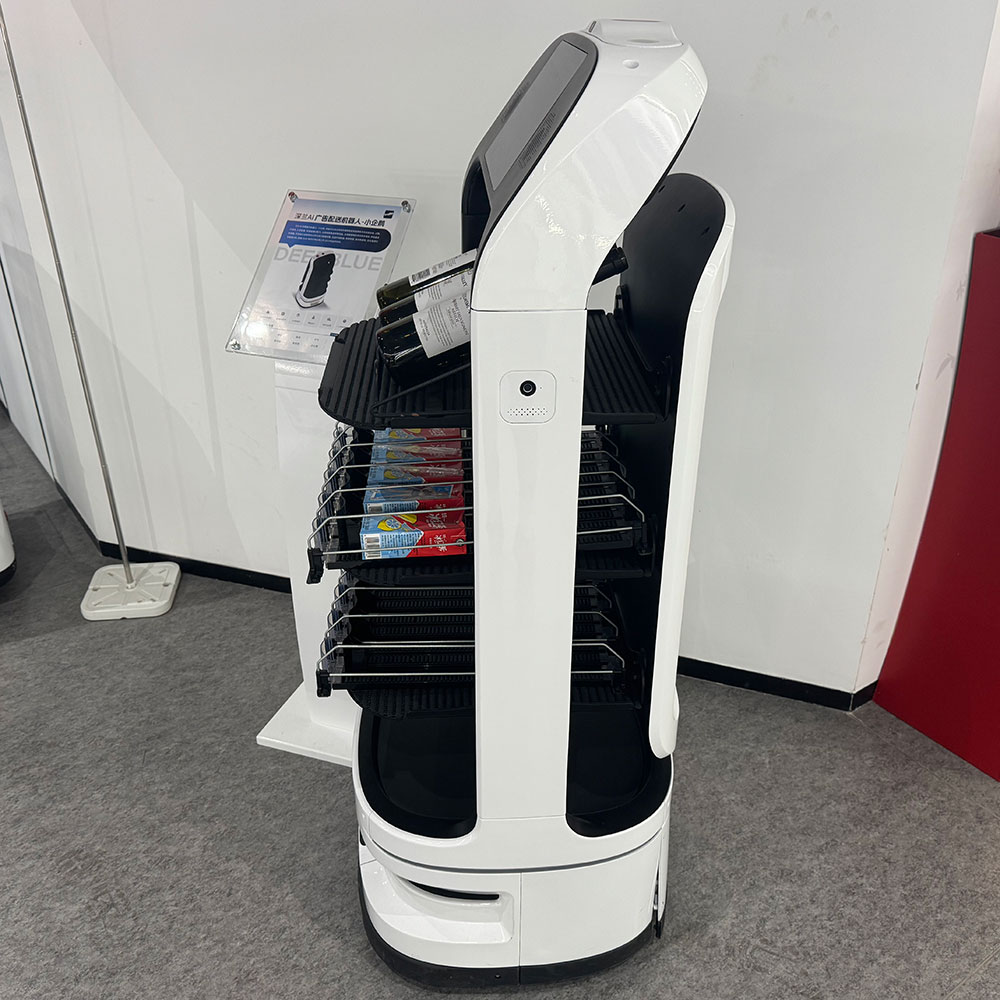
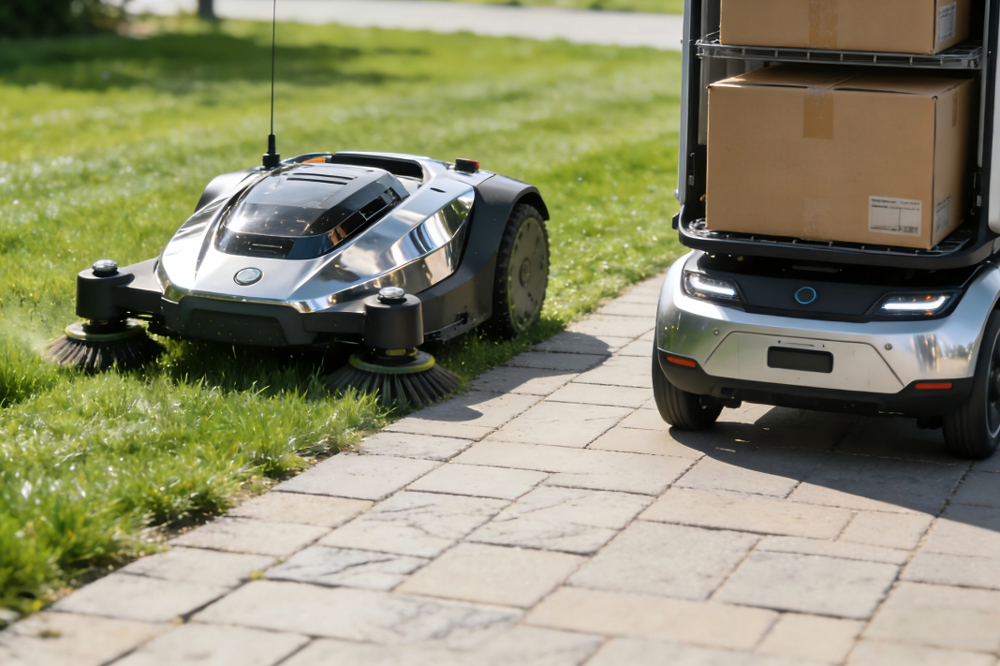
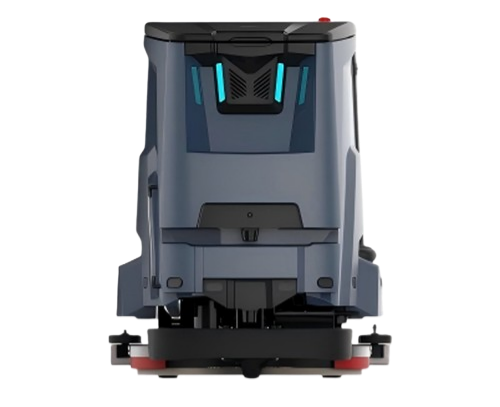
In the food and beverage sector, delivery robots can autonomously transport dishes from the kitchen to the table, collect empty plates, and some models can even introduce menu items. In the hotel industry, delivery robots handle cross‑floor room deliveries by connecting with elevator systems for autonomous navigation; cleaning robots perform integrated tasks such as sweeping, vacuuming, mopping, and scrubbing, adapting to different floor surfaces. In retail and commercial spaces, guide robots assist customers with shopping and answer inquiries; in public areas like airports and hospitals, information robots provide flight details or medical guidance, effectively easing the burden on staff.
Take Pudu Robotics, for example – this Shenzhen‑based company has built a product portfolio covering ten industries including catering, hospitality, retail, industrial, and healthcare, with cumulative global shipments exceeding 130,000 units and business presence in over 80 countries and regions.
From “Single‑Product Breakthrough” to “Collaborative Services” – The Industry Moves to a New Stage
As technology continues to mature, the commercial service robot industry is undergoing profound transformation. IDC reports indicate that with the continuous advancement of Physical AI, embodied intelligence models, and multimodal perception capabilities, service robots are shifting from “passively executing tasks” to “autonomously completing tasks,” while their application boundaries are extending from relatively standardised indoor settings to more complex and open commercial environments.
The industry trend is moving from single‑product offerings to multi‑category collaboration. The synergy of “general‑purpose humanoid robots + specialised service robots” is emerging as a key direction – humanoid robots handle more complex and flexible interactive tasks, while specialised robots take on high‑frequency standardised jobs like delivery and cleaning. Together, they form a complete service loop through division of labour.
At the same time, the competitive focus of the industry is also shifting. Hardware differentiation is narrowing, the localisation rate of core components continues to rise, and product feature iteration cycles have shortened to around three months. Customers’ concerns are moving from “can the robot move” to “can it complete tasks reliably and stably.” From delivery robots in restaurants to cleaning robots in hotels, commercial service robots are quietly transforming our service experiences. They are not meant to replace humans, but rather to free people from repetitive and mundane labour, allowing them to focus on more creative and empathetic work. As AI technology continues to break new ground and application scenarios expand, commercial service robots will deliver value in even more fields, becoming indispensable assistants in our daily lives.