



Five Key Hard Metrics to Consider When Selecting a Factory Cleaning Robot
In the midst of manufacturing's intelligent transformation, factory cleaning has long evolved from a "supporting task" into a core link that ensures production safety, improves product quality, and reduces operational costs. Manual cleaning is inefficient and leaves many blind spots, while traditional cleaning equipment suffers from poor adaptability and high maintenance costs. Factory cleaning robots have emerged as a key solution to break through these cleaning challenges. However, faced with a wide variety of products on the market, blind selection not only fails to solve cleaning pain points but may also result in wasted costs. To select the right factory cleaning robot, you need to focus on the following five key hard metrics to accurately match the needs of factory scenarios and truly achieve cost reduction and efficiency improvement.
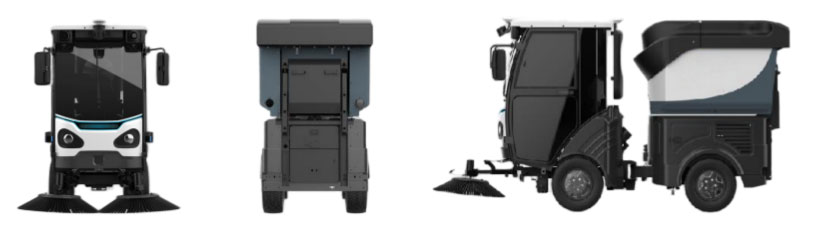
The complexity of factory scenarios is the first test for a cleaning robot and a core prerequisite for its practical implementation. Unlike household or commercial settings, factory workshops are densely packed with machine tools, shelves, and conveyor lines. The floor may have height differences, pipelines, and trenches, and may involve different floor materials such as cement or epoxy. Moreover, pollutants vary greatly across industries – machining workshops have metal shavings and oil stains, electronics workshops require strict dust control, and storage areas have packaging debris and杂物 buildup.
An effective factory cleaning robot must possess strong scenario adaptability. It should autonomously recognize fixed equipment and temporarily stored materials in the workshop, maneuver flexibly in narrow aisles, and precisely control its travel path – ensuring it can operate without being hindered by space constraints and without accidentally touching production equipment that could disrupt operations. At the same time, for different types of pollutants, the robot should be able to flexibly adjust its cleaning method. Whether it's deep cleaning of viscous oil stains or efficient collection of fine dust, the robot should meet scenario needs through tailored design, avoiding a one-size-fits-all superficial clean, and truly adapting to the complex conditions of the factory.
The core value of a cleaning robot ultimately lies in "cleaning" itself. In a factory, the requirement is not just to "sweep clean" but also to "not disrupt work and leave no dead ends." Factory production schedules are tight, so cleaning operations must not interfere with normal workflows. At the same time, areas under equipment, corners, and gaps between shelves are often blind spots for manual cleaning and are key areas where pollutants accumulate, creating potential safety hazards.
When selecting a robot, special attention should be paid to its cleaning efficiency. It should strike a balance between deep cleaning and operational efficiency. On one hand, it must be able to precisely adjust cleaning intensity according to different pollutants to ensure thorough cleaning of critical areas around equipment and under production lines, preventing oil and debris from affecting equipment precision or product quality. On the other hand, it should flexibly adapt to production rhythms – cleaning during breaks, changeover times, or other fragmented periods, or working in parallel with workers and equipment while maintaining a safe distance. Through scientific path planning, the robot should achieve full coverage of the cleaning area, neither missing dead zones nor wasting time on redundant cleaning – truly delivering "cleaning without disrupting work."
Factory environments are harsh, with frequent personnel movement and dense equipment. Some workshops may even contain flammable, explosive, or corrosive materials. This requires the cleaning robot to have extremely high safety and reliability to serve stably in industrial settings over the long term. Safety and reliability are not only about the robot's own stable operation but also about avoiding impacts on factory production safety and protecting personnel and equipment.
From a safety perspective, the robot should have comprehensive safety protection mechanisms. It must accurately recognize dynamic obstacles such as pedestrians and moving equipment, decelerating or avoiding them in time to prevent collisions. Its operating noise should be kept within a reasonable range so as not to interfere with workshop communication or equipment operation. For special workshops, the robot must also have additional safety features such as explosion-proof and corrosion-resistant designs to eliminate safety hazards. From a reliability perspective, the robot's body structure should be robust and durable, capable of withstanding minor impacts and dust ingress in the workshop. Key components should operate stably over long periods, reducing the frequency of failures. At the same time, the robot must adapt to complex environments such as high/low temperatures, high humidity, and high dust levels, ensuring no breakdowns due to environmental changes, so that cleaning tasks can proceed continuously.
One of the core purposes of introducing a cleaning robot in a factory is to reduce operational costs. If the robot is complicated to maintain and incurs high maintenance costs, it will instead increase the burden on the enterprise. Therefore, ease of maintenance is an indispensable hard metric when selecting a robot, as it directly determines the total cost of long-term use and the user experience.
Ease of maintenance is reflected in several aspects: First, strong autonomous maintenance capabilities – the robot should be able to automatically recharge and change water, requiring minimal manual intervention and enabling 24/7 continuous operation. Second, a rational structural design that is easy to disassemble and clean – routine replacement of cleaning components should be simple and not require specialized technicians. Third, convenient fault diagnosis – the robot should have a robust fault alarm and diagnostic function that promptly alerts the cause of any problem, allowing staff to quickly resolve it and minimize downtime. Fourth, highly interchangeable consumables with low replacement costs – there should be no need to purchase expensive proprietary consumables. Over the long term, this effectively controls maintenance costs and truly achieves "labor-saving, cost-saving, and peace of mind."
As manufacturing shifts toward digitalization and intelligent transformation, factory cleaning robots are no longer isolated tools but part of the industrial intelligent ecosystem. Their intelligent collaboration capability directly determines how well they can integrate into factory production workflows and deliver greater value. This is especially true for large factories and industrial parks, where a single robot cannot meet cleaning needs; multi-robot collaboration and system integration become essential.
A factory cleaning robot should have strong intelligent collaboration capabilities. It should be able to connect to the factory's Industrial Internet and exchange data with production management systems and warehouse management systems. It can automatically adjust its operation schedule and areas based on production plans, and feed cleaning data back to the management platform in real time to support workshop environment optimization. Additionally, multiple robots should be able to work together autonomously – rationally dividing areas, dynamically adjusting task allocation, avoiding overlap or omission, and significantly improving overall cleaning efficiency. Furthermore, the robot should be able to interface with workshop facilities such as rolling doors and freight elevators to enable cross-zone cleaning, truly integrating into the factory's digital system and helping the factory achieve a comprehensive intelligent upgrade.
In summary, when selecting a factory cleaning robot, you don't need to be confused by complicated parameter sheets. Focus on these five key hard metrics – scenario adaptability, cleaning efficiency, safety and reliability, ease of maintenance, and intelligent collaboration – and combine them with your factory's industry characteristics, workshop layout, and cleaning needs. That way, you can select a truly suitable product. A factory cleaning robot not only solves cleaning pain points but also becomes a powerful assistant in reducing costs, improving efficiency, optimizing the production environment, and advancing intelligent transformation – injecting new momentum into your enterprise's development.