



From "Command Execution" to "Emotional Symbiosis": How Intelligent Companion Robots Are Reshaping Modern Family Life
With the rapid advancement of artificial intelligence and large language models, robots are no longer a distant fantasy from science fiction films. From living rooms to bedrooms, from children's study areas to senior living spaces, intelligent companion robots are entering the daily lives of Chinese families at an unprecedented pace. The global market for intelligent robot hardware continues to expand, and educational companion robots have become one of the fastest-growing segments. Intelligent companion robots are emerging as another smart terminal poised to enter millions of households, following in the footsteps of smartphones.
So, what exactly is an intelligent companion robot? And what value can it bring to modern families?
I. Industry Trend: Companion Robots Become a "New Species" of Home Smart Terminals
In recent years, the robotics industry has reached an important turning point, moving from technical validation to practical application. The home scenario has become the "first battlefield" for consumer-grade robot deployment. Companion robots with a certain level of AI capability, as well as quadruped robot dogs, are beginning to enter the consumer market.
The market's enthusiasm is evident to all. Globally, companion robots have become a focal point at major technology exhibitions. From full-scene embodied intelligence product matrices, to "perceptually intelligent" proactive home companions, to the emerging category of cyber pets, numerous innovative products have made concentrated appearances. The industry has reached a consensus: the future of robotics lies not only in factories and warehouses, but also in every family's living room.
II. Core Technologies: The "Brain" and "Senses" of Companion Robots
To understand how an intelligent companion robot can interact naturally with humans, we first need to understand its technical architecture. An excellent companion robot typically integrates multiple cutting-edge technologies:
Traditional human-robot interaction remains at the mechanical level of "command-response." Today's companion robots, however, are equipped with advanced natural language understanding engines. They can not only comprehend users' everyday conversations and accurately execute various action commands, but also support multi-turn emotional interactions. More advanced affective computing systems can comprehensively perceive multi-dimensional signals such as vocal tone and facial expressions, recognize changes in user emotions, and generate matched verbal and physical responses, making interactions more warm and engaging.
Visual following technology based on deep learning algorithms enables robots to lock onto a target in real time and maintain stable following. Even in crowded or complex environments, the robot can accurately identify the target and quickly relocate it if tracking is lost. Coupled with multi-sensor fusion-based autonomous navigation technology, the robot can intelligently plan routes, precisely avoid obstacles, and achieve safe, autonomous movement.
True intelligent companionship is not static. Through cloud data and machine learning technologies, companion robots continuously learn their owner's behavioral habits, language preferences, and even emotional patterns. From daily interactions, they gain insight into users' habits, moods, and lifestyles, thereby providing increasingly personalized services—truly "growing with you."
III. Product Features: More Than Companionship, a Versatile Home Assistant
Modern intelligent companion robots have long surpassed the positioning of mere "toys." Their functions cover many aspects of daily life, primarily including the following:
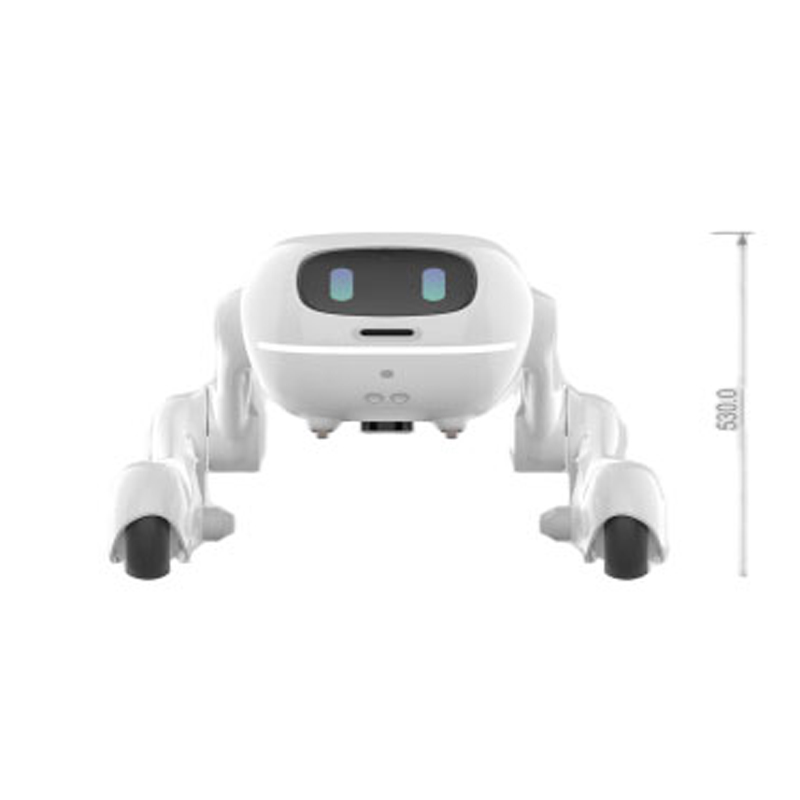
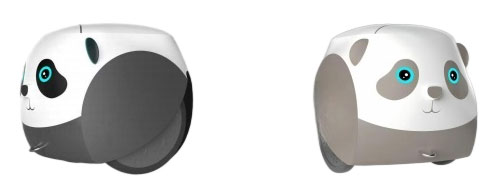
is the core value of the robot. Leveraging natural language understanding and multi-turn emotional interaction capabilities, the robot can engage in meaningful conversations with family members. Its LED expressive eyes convey emotional feedback in real time, making interactions warm and enjoyable rather than cold and mechanical.
functions make the robot a capable assistant for outings. Whether shopping, walking a pet, or engaging in outdoor activities, the robot steadily follows behind the user, freeing up their hands.
ensure the robot runs smoothly on various types of home flooring. A self-balancing control system composed of gyroscopes and accelerometers achieves dynamic response. Combined with multi-sensor autonomous navigation technology, the robot can safely and reliably traverse all-terrain conditions in the home.
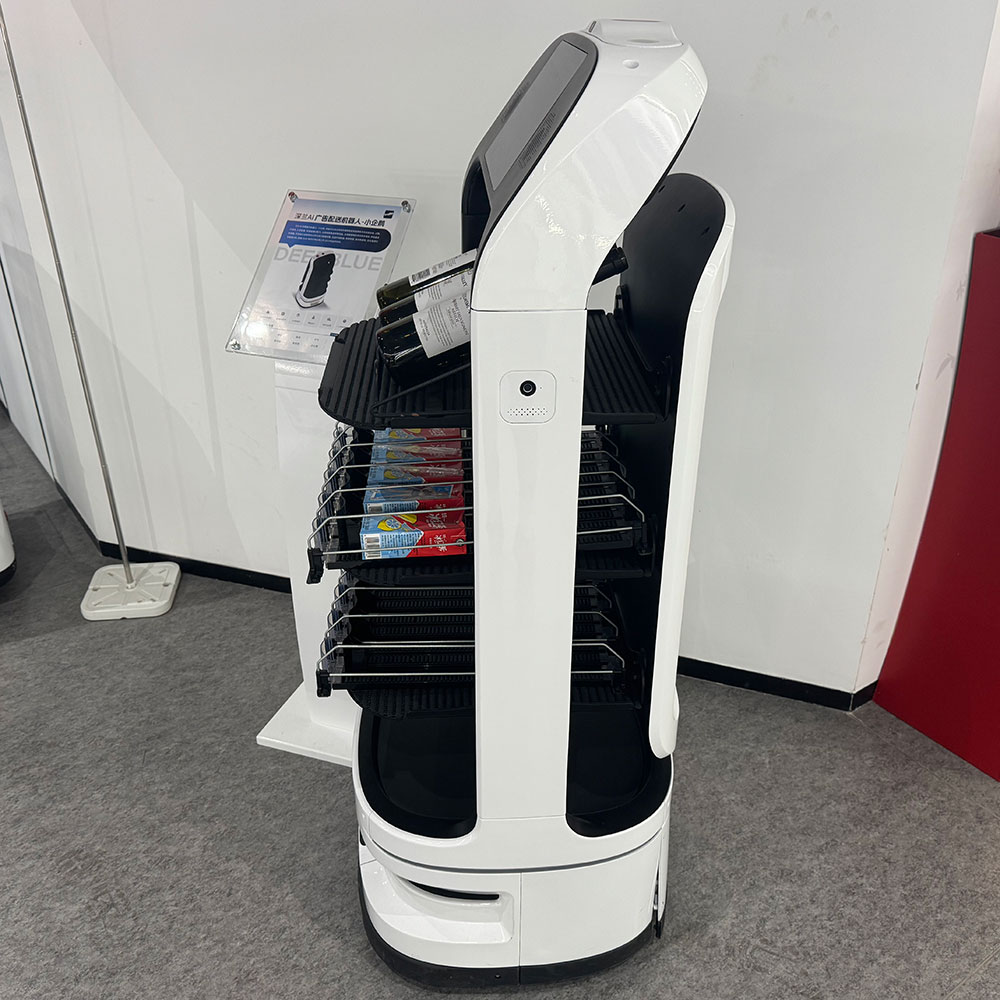
allows the robot to truly serve multiple purposes. At home, it is a learning companion for children and a caring aide for the elderly. During travel, it becomes a luggage-following assistant and a portable guide. In specific scenarios, it can also transform into a commercial terminal such as a shopping mall guide or a park patrol robot, meeting diverse needs.
It is worth mentioning that high-quality companion robots also feature industrial-grade protection capabilities, allowing stable operation in extreme temperatures, from severe cold to intense heat, and are unfazed by rain, snow, or dust—truly providing round‑the‑clock companionship.
IV. Looking Ahead: Where Are Companion Robots Headed?
It can be foreseen that with the continuous evolution of large model capabilities and the ongoing maturation of sensors, computing power, and algorithms, companion robots of the future will become even smarter, more humanized, and more deeply integrated into daily life. They will no longer be synonymous with cold machines, but will become indispensable "digital members" of the family—intelligent companions that can grow up with children, provide care for the elderly, and share the burden of everyday chores.
Intelligent companion robots are redefining the warmth of "home" through technology.