



From Concept to Living Room: Why 2026 Is the Breakthrough Year for Companion Robots
The companion robot industry is having a moment. What was once a niche category of tech curiosities has rapidly evolved into one of the most dynamic segments in consumer robotics—and 2026 is shaping up to be the year it all comes together.

The Market Takes Shape
The numbers tell a compelling story. The global companion robot market is forecast to grow from $2.2 billion in 2026 to $3.8 billion by 2031, representing a compound annual growth rate of 11.6%. The smart home companion robot segment alone, valued at $2.84 billion in 2025, is projected to reach $8.34 billion by 2032. Meanwhile, the healthcare companion robots market is expected to expand from $3.02 billion in 2026 to $10.18 billion by 2034.
But beyond the spreadsheets, something more fundamental is shifting. Companion robots are moving from single-purpose devices into always-available assistants that blend mobility, conversational AI, sensing, and home integration. Unlike smart speakers or fixed cameras, these robots can navigate across rooms, observe context, and adapt their behavior to household routines.
CES 2026: A Coming-Out Party
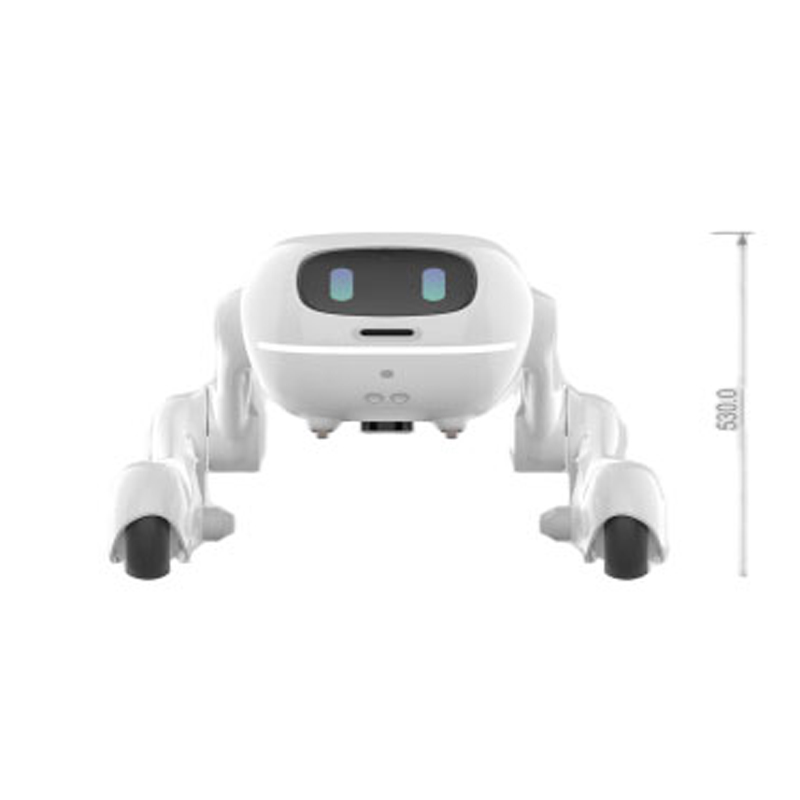
If any single event signaled the arrival of companion robots as a mainstream category, it was CES 2026 in Las Vegas. Small companion robots stole the show at the media preview, with names like Nico, Jennie, Cocomo, Mirumi, and Yonbo X1 capturing attention. The message was clear: robots are approaching large-scale application, and they're coming to a living room near you.
The diversity of approaches on display was striking:
The Technology Behind the Warmth
What makes today's companion robots fundamentally different from their predecessors is the convergence of several key technologies.
A Commercial Inflection Point
Perhaps the most telling indicator of market momentum came in June 2026, when UBTECH's U1 series—the world's first full-size companion humanoid robot—achieved nearly 5,000 pre-orders in just 17 days. Standing 183 cm tall with 88 degrees of freedom and a built-in emotional companionship AI model, the U1 explicitly targets urban dwellers experiencing loneliness. This represents a dramatic acceleration for UBTECH, which sold only 1,079 full-size humanoid robots throughout all of 2025.
Deutsche Bank has sharply revised its global humanoid robot shipment forecast for 2026 from 17,500 to nearly 50,000 units, with China expected to maintain global leadership and shipments potentially doubling to approximately 40,000 units.
Drivers and Challenges
Several forces are converging to make this moment pivotal:
Yet challenges remain. High initial costs are a key barrier. Technical limitations persist in accurately understanding complex human emotions and social contexts. And ethical and privacy concerns around data collection continue to shape user trust.
The Road Ahead
Industry observers note that while the mass production era has begun, the real race is now about finding the right balance among cost control, scenario definition, and user experience. Business models are shifting toward lifecycle value through services—subscriptions for monitoring, premium AI features, caregiver portals, or extended warranties.
North America currently leads the market due to strong technological infrastructure, but Asia Pacific is expected to witness faster growth, supported by aging populations and increasing investment in robotics innovation.
Beyond the Hype
What's most striking about the 2026 companion robot landscape is the philosophical diversity on display. Some companies are pushing toward humanoid forms and maximum intelligence. Others are deliberately limiting capabilities to create more pet-like, comfortable companions. Some are targeting specific healthcare needs; others are aiming for broad consumer appeal.
What unites them is a shared recognition that the future of robotics is not just in factories and warehouses—it's in living rooms, bedrooms, and the everyday spaces where people live, age, and sometimes feel alone.
Companion robots are no longer a distant science fiction fantasy. They are here, they are evolving, and they are beginning to redefine what it means to have a "smart" home—not just in terms of efficiency, but in terms of emotional warmth.