

0102030405
What Are the Key Features of Smart Cleaning Robots?
2026-04-28
As labor costs rise and efficiency demands increase, commercial cleaning robots are shifting from "optional" to "essential". Next-generation smart devices are no longer simple vacuum cleaners—they have evolved into integrated cleaning solutions that combine automation, intelligent perception, and data management.
1. Round-the-Clock Automated Cleaning – Freeing Up Labor
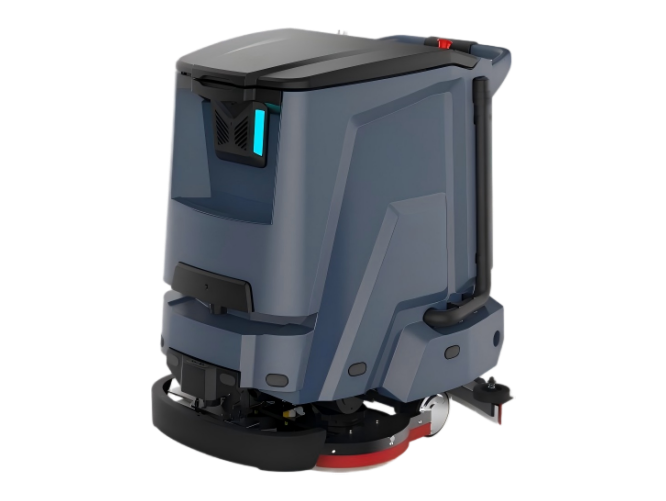
Unlike home-use models, commercial environments (such as office buildings, shopping malls, and airports) are large in area and have complex pedestrian traffic. MHD-class commercial robots come standard with LDS laser navigation + SLAM algorithms, enabling them to autonomously map out areas up to millions of square meters and plan full-coverage paths. They can automatically execute tasks before office hours or late at night, with a single charge lasting 4–6 hours, and support auto-recharging and breakpoint resume. This enables 7×24 hour unattended cleaning, which is the core of cost reduction and efficiency improvement in commercial settings.
2. All-in-One Multi-Functionality: Sweeping, Mopping, Scrubbing, Vacuuming & Sanitizing
Commercial robots typically feature a modular design. A single unit can quickly switch between:
- Rolling brushes / side brushes for dust and debris
- Disc brushes + water circulation system for deep scrubbing
- UV light or disinfectant spray for sanitizing public areas
3. Intelligent Recognition & Safe Obstacle Avoidance
Commercial environments contain many dynamic obstacles (pedestrians, handcarts, temporary tables and chairs). Advanced sensor suites include:
- 3D vision + depth cameras to detect low‑lying objects and glass partitions
- Ultrasonic / LiDAR sensors to detect transparent or highly reflective surfaces
- Cliff sensors to prevent falls into elevator shafts or escalators
4. Customization & Scene Adaptability – On‑Demand Cleaning Strategies
Commercial clients require fine‑grained management. Through supporting software, administrators can set for different zones:
- Cleaning modes: standard / powerful / quiet / deep sanitizing
- Scheduled tasks: morning, noon and evening each day, or mopping only on weekends
- Virtual walls & restricted zones: avoid checkout counters, under shelves
- Edge‑following settings: distance along edges, number of repeat passes
5. Smart Connectivity & Cloud Management – Data‑Driven Decision Making
This is the most distinguishing feature of commercial robots compared to consumer models. Robots connect to the cloud platform via 4G/Wi‑Fi, enabling:
- Remote control & monitoring: real‑time view of location, battery level, cleaned area on mobile or web
- Task reports: automatically generate daily/weekly cleaning reports including time taken, water consumption, and battery warnings
- Multi‑robot coordination: in very large venues (exhibition halls, warehouses), multiple robots divide areas without interfering with each other
- Fault diagnosis & OTA updates: remotely fix software issues, reduce on‑site maintenance costs
Conclusion
In summary, autonomous commercial cleaning robots have evolved from single‑function devices into intelligent terminals that integrate sensing, decision‑making, execution, and data feedback. With highlights such as fully automated cleaning, multi‑function integration, precise obstacle avoidance, flexible customization, and cloud connectivity, they not only greatly improve cleaning quality but also provide managers with visible operational value. In the future, as AI recognition becomes more advanced and base station self‑cleaning technology matures, commercial cleaning robots will become standard equipment in even more industries.