inquiry
Leave Your Message

Blog

How to Choose an AI Talking Robot in 2026?

How to Choose an AI Talking Robot in 2026?

Honestly, when you're picking an AI talking robot in 2026, it's not about the cute face or how smooth the sales demo goes. I mean, sure, the thing might sit on your kitchen counter, hear your kid ask something, and answer back in a voice that sounds like a friendly aunt or something. But real conversations? That's a whole different ballgame. You've got to dig into stuff like language support, how accurate the responses are, whether they actually update the thing, how they handle your data, if it'll survive a few drops, and let's not forget—what happens when the Wi-Fi goes out? Because honestly, the small stuff matters more than you think. Like, can it even pick up a soft voice from across the room? That's the kind of thing that'll drive you nuts later. Hey, just wondering—can the caregivers actually review or tweak the settings themselves? Now, before we get too excited about robots that chat with you, let's keep some perspective. Sure, industry stats give us a bit of context, but they're not a crystal ball for talking machines. The World Robotics 2024 report from the International Federation of Robotics shows that about 205,000 professional service robots were sold in 2023 – that's up 30% from the year before. But hold on, that number covers all kinds of service robots, not just ones that can hold a conversation. So yeah, the difference between a general service robot and your friendly chatbot is pretty big, and it's important to keep that in mind. Just because robots are trending doesn't mean every Talking AI Robot out there is actually reliable, educational, or worth your hard-earned cash. Stanford's AI Index Report 2025 does a solid job tracking how quickly AI is evolving and being adopted, but let's be real—that's not the same as putting individual products to the test. So yeah, take those big-picture trends with a grain of salt when you're eyeing a specific gadget. Honestly, when you're picking a practical robot, it all starts with who's gonna use it and where. Like, if it's for a kid, you'll want to check the age guidance, parental controls, and even how the conversations get stored. On the flip side, for an older adult, you should test how clearly it speaks, how easy the setup is, and what happens in emergencies. Don't forget to ask about subscription requirements either. Then take it for a real spin – try asking it random ordinary questions, maybe with some background noise or a weak Wi-Fi. It's not a perfect test, sure, but it'll often reveal awkward pauses, misunderstood commands, or promises that the thing just can't keep. Alright, so you're in the market for a robot, huh? It's easy to get overwhelmed with all the options. This guide is here to help you figure out how to really compare what you're looking at, not just the shiny specs. You gotta dig deeper and check if the claims hold up in real life. And most importantly, pick one that actually works for your daily routine, not just one that looks cool on paper.
Read more »

Evelyn By:Evelyn - November 10, 2026
How to Choose a Package Delivery Robot

How to Choose a Package Delivery Robot

Picking a Package Delivery Robot isn’t just about speed—it’s a pretty practical decision involving routes, people, and everyday operations. In fact, the International Federation of Robotics’ World Robotics 2023 report tallied almost 86,000 professional service robots sold for transportation and logistics back in 2022. Honestly, that category covers a lot more than just sidewalk delivery, so it's useful for context—definitely not a delivery-robot sales figure. Big difference, and it matters. Ahti Heinla, one of the co-founders at Starship Technologies, says the whole point is to make local delivery “more convenient, more affordable and more sustainable.” But honestly, buyers should check whether a robot can actually deliver on that promise along their own routes. Look at payload capacity, range, charging time, how it handles weather, how well it navigates curbs, and how customers get their parcels. And ask for operating data from sites that look like yours. A smooth demo on an empty path? That doesn’t prove much. You know, it's the little things that really trip you up sometimes. Think about it—a narrow entrance, a steep curb, or a super crowded pickup area can throw a whole operation off track. And when you're comparing costs, don't just look at the sticker price. You've gotta factor in everything: fleet supervision, maintenance, software, and support—the whole nine yards. Plus, you should definitely check how accessible it is, whether parcels are safe, and what happens if a delivery fails. Does the supplier have a solid plan? Here's the thing: even if a robot has killer specs, it might still be a terrible fit for a busy campus or a mixed-use neighborhood. At the end of the day, there's no one-size-fits-all answer. It all depends on the site, so you've got to do your homework. Look, forecasts and what vendors tell you? Treat those as just starting points. Then run a small, measured pilot—set clear service targets, and see how it actually goes. Even with careful testing, there's still some uncertainty. And honestly, it's worth admitting that before you buy.
Read more »
Evelyn By:Evelyn - November 7, 2026
What Is a Package Delivery Robot and How Does It Work?

What Is a Package Delivery Robot and How Does It Work?

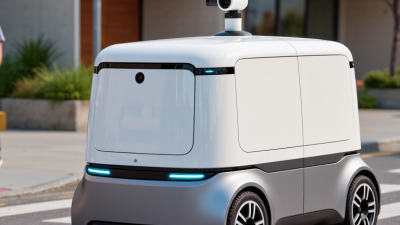
Okay, so a package delivery robot is basically a little self-driving vehicle that handles the last leg of a package's journey. You've probably seen them rolling along sidewalks—they'll pause at a curb, wait for a gap, then weave around people, bikes, and the occasional parked car. The package itself stays locked in a secure compartment the whole time, and the customer opens it using an app or a delivery code. Pretty neat, right? Ahti Heinla, the co-founder of Starship Technologies, is kind of a big deal in this world. The way he sees it, autonomous robots have the potential to make local delivery a whole lot more convenient and efficient. That’s the pitch, anyway. But pulling it off is another story. You’ve got cameras, sensors, maps, and onboard software all working together to help the robot spot obstacles and pick a path. And if it gets confused—say, there’s a blocked path or some messy construction barrier—a remote operator can jump in to help. It’s the little details that end up mattering most. So here's the thing about package delivery robots—they don't just roll up to your door. There's a whole process: they get an order, figure out a route, move around without running into things, and finally hand over the parcel. But it's not all smooth sailing. Weather, uneven sidewalks, and actually getting the customer to show up? Yeah, those are real headaches. A robot can follow a map pretty well, but streets are messy and always changing. That's a pretty big gap, if you ask me. Also, keep in mind that performance claims vary a lot depending on the model and conditions, so don't take marketing numbers at face value. The tech is genuinely useful—but it definitely has its flaws.
Read more »
Amelia By:Amelia - November 2, 2026
How to Choose Industrial Mobile Robots for Your Business?

How to Choose Industrial Mobile Robots for Your Business?

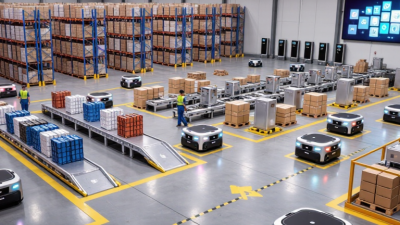
When you're looking at industrial mobile robots, it really comes down to a practical call: how do you move materials safely, consistently, and without a lot of hassle? Sure, the market is booming—but honestly, those headline numbers deserve a closer look before you read too much into them. So the International Federation of Robotics just dropped its World Robotics 2024 report, and the numbers are pretty wild. Apparently, around 541,302 industrial robots were installed worldwide in 2023 — and the total running stock? Roughly 4.28 million. One thing worth noting though: these figures cover all industrial robots, not just mobile ones. That distinction actually matters quite a bit. Okay, so industrial mobile robots—they can do a lot, like shuffling totes between production lines, hauling components around a warehouse, or even dropping tools off at a work cell. But picking the right one isn't just about specs. You really have to look at the actual route, how much weight it'll carry, what the floors are like, and honestly, how much foot traffic there is. That clean aisle on the blueprint? It might have expansion joints, ramps, or a random pallet parked in the way once you're on site. It's the little things that trip you up. If you're checking out robots, don't just look at the sticker price. You've gotta compare navigation methods, charging plans, fleet software, safety features, service availability, and integration costs too. Running a pilot on a route that actually represents your real operations can help you spot bottlenecks before you buy. That said, pilots can be misleading if you only run them during the quiet shifts—so keep that in mind. Here's the thing: no single robot is going to work for every facility. You can have a really solid spec and still miss some awkward handoff or a workflow that shifts on you. It's worth being honest about that from the start. So this guide is really about figuring out what your operation actually needs, comparing your options, and then testing what suppliers claim against real, measurable conditions in your own facility. And when you see those industry growth numbers? Treat them as context, not as proof that automation will magically pay off in your building.
Read more »
Amelia By:Amelia - October 29, 2026
2026 Top Package Delivery Robots for Global Buyers

2026 Top Package Delivery Robots for Global Buyers

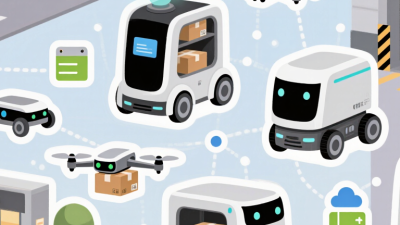
Global parcel networks keep expanding, sure—but the final delivery step is still a pain: congestion, labor pressure, and customers who expect more and more. According to the Pitney Bowes Parcel Shipping Index 2024, the world recorded 161.8 billion parcels in 2023. Yeah, at that scale, small autonomous vehicles start to look pretty relevant. That said, tech by itself won't fix every problem at the doorstep. So, according to the International Federation of Robotics, transportation and logistics led the way in professional service robot applications in 2023. In fact, more than 100,000 units were sold in that category alone. And a Package Delivery Robot? It can handle short-distance deliveries—think campuses, residential communities, hospitals, and business parks. What makes it useful? Well, it’s all pretty practical stuff: a secure compartment, low-speed navigation, curb detection, and charging on a schedule. To the customer, though, it might just look like a quiet vehicle pulling up beside the front entrance. Starship Technologies CEO Alastair Westgarth has described the vision as making delivery robots “a normal part of everyday life.” That’s a useful ambition—but it definitely needs careful testing. Sidewalk design, weather, accessibility, remote assistance, and customer trust can vary a lot from market to market. So the best model in one city might really struggle in another. If you're a global buyer looking at package delivery robots in 2026, this guide compares the leading solutions out there. We look at payload capacity, operating range, autonomy, fleet software, safety features, service support, and real-world deployment experience. Here's the thing: public data isn't always consistent. Some manufacturer claims? They still need independent verification. And that matters. A smart purchase decision means looking at real routes—not just slick demos.
Read more »
Evelyn By:Evelyn - October 24, 2026
Top Automatic Delivery Robot Suppliers Worldwide

Top Automatic Delivery Robot Suppliers Worldwide

Automatic Delivery Robot technology is moving from pilot projects to visible urban and commercial services. The International Federation of Robotics reported nearly 205,000 professional service robots sold worldwide in 2023. Transportation and logistics represented the largest application group, showing strong demand for automated movement across campuses, hotels, restaurants, and local delivery routes. The market is broadening. This article examines top Automatic Delivery Robot suppliers worldwide, including Starship Technologies, Serve Robotics, Nuro, Pudu Robotics, Keenon Robotics, and Cartken. These companies differ in important ways. Some focus on sidewalk delivery, while others serve hospitals, hotels, airports, and indoor facilities. Their systems may combine cameras, lidar, ultrasonic sensors, remote assistance, and fleet-management software. The International Federation of Robotics highlights transportation, logistics, and hospitality as major professional service robot applications. Meanwhile, industry research from Interact Analysis identifies mobile robots as a rapidly expanding automation segment, supported by labor shortages and rising fulfillment expectations. Supplier quality cannot be measured by unit price alone. A serious comparison should consider navigation performance, payload capacity, battery range, deployment time, maintenance support, data security, and local operating requirements. Real experience also matters: a robot must handle narrow sidewalks, wet floors, elevators, pedestrians, and unexpected obstacles. Public performance data remains uneven, and some supplier claims are difficult to compare directly. That is a weakness worth acknowledging. No platform performs perfectly in every environment. The strongest suppliers usually combine practical field experience, transparent technical documentation, reliable support, and measurable results from real deployments.
Read more »
Evelyn By:Evelyn - October 20, 2026
10 Tips for Choosing the Right AGV Robot?

10 Tips for Choosing the Right AGV Robot?

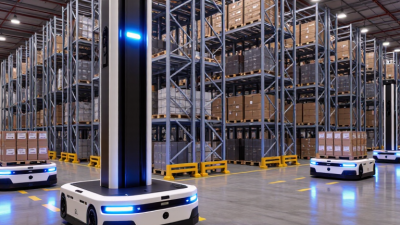
Picking the right AGV Robot isn't just about buying another piece of equipment. It can shape how your warehouse flows, how safe your workers are, how accurately you hit delivery windows, and whether you can scale later. The International Federation of Robotics says 541,302 industrial robots were installed worldwide in 2023—a number that shows just how fast automation is moving into everyday operations. But here's the catch: that number includes far more than mobile robots. So buyers still have to look closely at what their own facility actually needs. And the risks are pretty real. An AGV might keep stopping next to a loading dock because its navigation system doesn't like reflective flooring. Another one might handle the weight fine but lose efficiency in narrow aisles. Those kinds of details? They rarely show up in glossy brochures. What matters more is site experience, maintenance history, and verified performance data. The 2024 MHI Annual Industry Report also points to continued investment in robotics, automation, and supply chain tech. That's good news, sure, but it can also push people into making rushed decisions. So this guide offers ten practical tips for evaluating an AGV robot. We'll look at payload capacity, navigation accuracy, battery life, fleet software, charging methods, safety features, and integration costs. Supplier support and operator training matter too. A cheap purchase price can hide some very expensive downtime. And a technically advanced model might still be a bad fit for a humid or uneven warehouse. The International Organization for Standardization has useful safety frameworks, including ISO 3691-4 for driverless industrial trucks. Still, compliance alone doesn't guarantee success. Even experienced teams can misjudge traffic patterns. That's why careful testing is still essential. The best choice isn't always the fastest robot—it's the one that performs reliably in the real world.
Read more »
Amelia By:Amelia - October 16, 2026
Top 10 Robot Lawn Mowers to Buy in 2026?

Top 10 Robot Lawn Mowers to Buy in 2026?

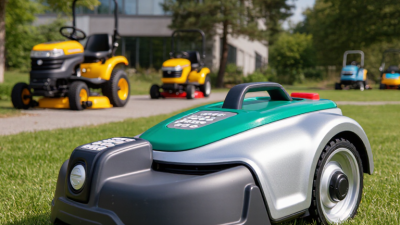
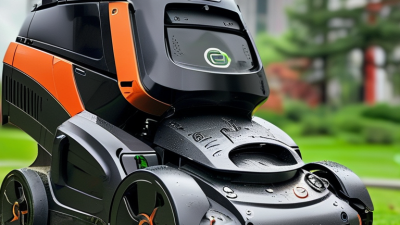
Robot lawn mowers are finally shedding that “cool gadget” label and turning into real garden tools. Grand View Research says the global robotic lawn mower market should keep growing by double digits through 2030. MarketsandMarkets also expects strong expansion—thanks to labor shortages, smart-home adoption, and better navigation systems. But the market estimates don’t all line up. And that gap is worth paying attention to. This guide looks at the Top 10 Robot Lawn Mowers to Buy in 2026. We compare cutting performance, boundary management, slope handling, noise, battery life, weather resistance, and after-sales support. A small garden and a big, uneven yard are not the same problem—they need different solutions. And price alone? It won’t tell you much about long-term value. Husqvarna product specialist Fredrik Ceder once called robotic mowing “a natural part of the smart home.” That’s still a useful way to think about it, though it’s not the whole story. Real ownership means installation time, app reliability, blade replacement, charging interruptions, and the occasional rescue from wet grass. Even premium models can struggle with narrow passages or unclear boundaries. Our evaluation pulls from manufacturer specs, independent testing, user feedback, and published market research. We also factor in practical experience—not just lab claims. The phrase Mower Robot Lawn Mower might sound repetitive, but it’s how shoppers actually search for this category online. Some conclusions may change as software updates roll out. That’s an important limitation to keep in mind. The best robot lawn mower isn’t automatically the most expensive one. It’s the one that fits your lawn’s size, terrain, layout, and maintenance expectations. Expect convenience—not a complete escape from garden care.
Read more »
Ethan By:Ethan - October 11, 2026
Top Mowing Machines for Global Buyers

Top Mowing Machines for Global Buyers

The global Mowing Machines market? Honestly, it's moving fast. Battery power, robotic navigation, and quieter gear are changing what buyers expect. Allied Market Research put the global lawn mower market at USD 30.4 billion back in 2021. Their report sees it growing to USD 52.5 billion by 2031—that's a 5.7% CAGR. Grand View Research points to battery-powered and robotic models as big growth spots too. The numbers don't line up perfectly. And that gap is worth noticing, since market definitions can be... well, a bit inconsistent. For global buyers, flashy specs aren't enough. You've got to compare cutting width, deck material, battery runtime, charging time, how it handles terrain, warranty coverage, and whether local service is actually available. A 46-cm deck might be fine for a small garden. Bigger commercial grounds? They need stronger engines, wider decks, and maintenance that isn't a headache. Wet grass will expose weak designs fast. Uneven soil will do the same. Kris Kiser, President and CEO of the Outdoor Power Equipment Institute, once said, "Safety is a shared responsibility." That idea should sit behind every buying decision, really. Buyers need to check operator controls, blade-stop systems, noise levels, and the manufacturer's instructions. OPEI says millions of outdoor power equipment products are sold in the U.S. every year—so yeah, this is a huge industry. But sales volume doesn't prove quality. Field testing still counts. This guide looks at leading Mowing Machines for international buyers. It weighs practical performance, ownership cost, reliability, and regional support. No ranking gets it perfect. A model that's loved in Germany might struggle on tropical grass. It's an uncomfortable detail, but buyers should keep it in mind.
Read more »
Evelyn By:Evelyn - October 8, 2026
What Is the Best Warehouse Cleaning Machine from China?

What Is the Best Warehouse Cleaning Machine from China?

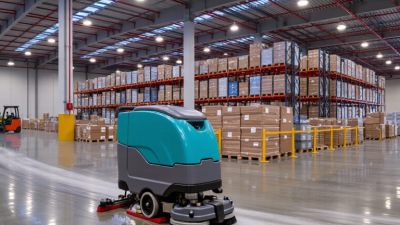
Picking out the best warehouse cleaning machine from China isn’t just about comparing prices, brush width, or battery size. You’ve got to think about what really matters—like how the floor gets so much abuse from forklifts, dust on pallets, tire marks, oil spots, and all that foot traffic. A machine that cleans polished concrete really well might struggle in areas with uneven surfaces—trust me, that’s a big deal. According to reports from Grand View Research, the market for commercial cleaning equipment has been growing steadily. Why? Well, labor shortages, higher hygiene standards, and automation are major factors. And interact Analysis points out that a ton of investment is going into warehouse automation and material-handling tech. So here’s the thing: can your cleaning gear keep up with the speed of your warehouse without causing extra maintenance headaches? That’s the real question. Hartmut Jenner, the guy who used to run Alfred Kärcher SE & Co. KG, once said, “Cleaning isn’t luxury—it’s a must.” And honestly, that still hits home, especially in busy logistics centers. Clean floors aren’t just for looks—they make moving vehicles safer, keep aisle markings clear, and make inspections easier. Plus, they help cut down on dust around scanners, conveyors, and storage racks, which is always a win. But here’s the thing—there’s no one-size-fits-all “best” Chinese cleaning machine. The right choice depends on your floor area, how often you clean, water recovery needs, noise restrictions, how skilled your operators are, and what kind of local support you can get. For example, a small ride-on scrubber might actually work better in tight spaces than a bigger one. And if you’re thinking about autonomous models, sure, they can save you labor—but they need careful mapping and daily oversight, so they're not automatically a no-brainer. Honestly, there’s no perfect machine out there. In this comparison, I’ll look at Chinese manufacturers, how scrubber-dryers perform, battery systems, spare parts availability, safety features, and after-sales service. It’s important to go beyond what they claim on paper—factory videos look cool, but nothing beats testing it out in the real world. When it comes down to it, a smart buying decision isn’t just about the sticker price. You should be considering how well it cleans, how often it breaks down, what kind of training you’ll need, and what the total cost of ownership looks like down the line.
Read more »
Amelia By:Amelia - October 3, 2026
Top 10 Warehouse Cleaning Machines for Global Buyers

Top 10 Warehouse Cleaning Machines for Global Buyers

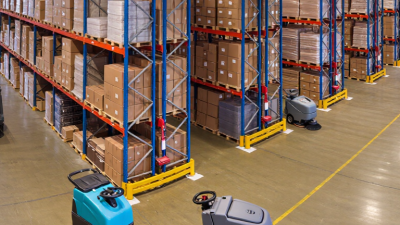
Picking the right Warehouse Cleaning Machine can really make a difference when it comes to safety, efficiency, and costs in a busy warehouse. But here’s the thing—what works perfectly in one place might not be ideal in another. Different floors, labor conditions, weather, and maintenance needs all play a role. And honestly, a shiny showroom picture can sometimes be pretty misleading. The real story is in the details—dusty aisles, oil spots near loading docks, tight spaces between racks—that’s what tells you how valuable a machine actually is. Michael Grant, an independent warehouse operations expert with over twenty years of experience, puts it simply: “Cleaning equipment needs to fit into the workflow, not disrupt it.” And he’s right. A small, nimble scrubber might weave easily between pallets, while a big ride-on sweeper can quickly cover larger concrete areas. When choosing, it’s smart to compare things like how wide the cleaning path is, how long the battery lasts, how much water or recovery capacity it has, noise levels, how easy it is to service, and how well the operator can see what they’re doing. Little details, like a stubborn drain hose, can really add up and waste time every shift. This guide looks at ten different Warehouse Cleaning Machines suitable for international buyers—covering sweepers, scrubber dryers, and combo units from well-known brands like Tennant, Kärcher, Nilfisk, Hako, and ICE. Each one needs to be carefully considered based on your specific warehouse setup. Some machines perform great on open floors but might struggle around dock plates or in tight corners. Others might have excellent battery life but come with support costs that could blow your budget. Let’s be real—there’s no such thing as a perfect machine. That’s an important truth to accept. Sometimes, a cheaper machine might end up costing more in repairs, while a powerful one could be overkill for a smaller facility. We’ve looked at what each machine does well, what its limitations are, and what owning it might really involve, so you can make a smarter choice. Because at the end of the day, clean floors might seem simple, but picking the right equipment isn’t. It’s a bit more complicated—and that’s okay.
Read more »
Amelia By:Amelia - September 29, 2026
Best China Robot Forklift Manufacturer for Global Buyers?

Best China Robot Forklift Manufacturer for Global Buyers?

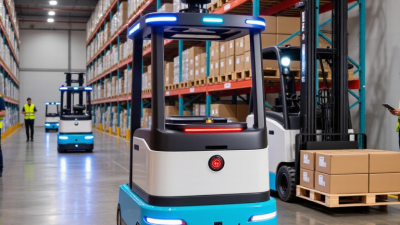
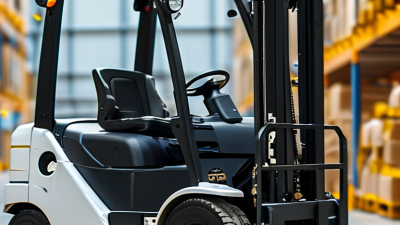
Picking the right China-based Robot Forklift manufacturer for your global needs isn’t just about rushing to compare prices. You really gotta look at a bunch of other stuff—safety features, how accurate the navigation is, battery life, software support, and of course, after-sales service. A trustworthy supplier will have solid test records, proof from their factories, and real-world deployment info. Just taking their word for it? Nah, that’s not enough. Martin McVicar, who’s the Managing Director of Combilift and a well-respected guy in the material handling world, once said, “Automation should make work safer and smarter, not just faster.” That’s a pretty good rule of thumb when shopping for robot forklifts today. A good manufacturer should get the ins and outs of your warehouse—things like traffic flow, narrow aisles, uneven floors, and how loads shift around. Plus, they need to be able to explain how the forklift reacts if someone steps into its path. And honestly, it’s often those little things that make all the difference. Like, when you’re looking at options, you should check things like laser scanner coverage, emergency stop accessibility, how well it detects pallets, the battery charging cycles, and whether it has remote diagnostics. Ask if it can connect with your warehouse management system too. And don’t forget about training, spare parts availability, and how fast they respond in your region. All these factors can end up costing you more in the long run than just the initial price tag. Today, Chinese companies like BYD Forklift, EP Equipment, and Noblelift are stepping up with some pretty competitive autonomous solutions. But here’s the thing—quality can vary from model to model and batch to batch. No supplier is perfect. Even the most capable robot forklift might need some route tweaks, software updates, or maybe some floor prep. This guide is all about helping you evaluate manufacturers based on real-world proof, technical skills, and user experiences. It’s not just about finding the cheapest deal. The goal is to find a partner you can trust—someone who offers safe, measurable, and scalable automation that works for the long haul.
Read more »
Evelyn By:Evelyn - September 24, 2026
Why Use Pallet Robots for Warehouse Automation?

Why Use Pallet Robots for Warehouse Automation?

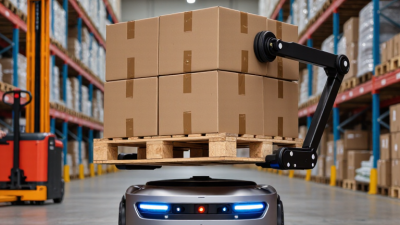
You know, Pallet Robots are really changing the game in warehouse automation. They handle heavy loads more reliably, faster, and with better control than humans ever could. Unlike manual pallet handling, these robots stick to repeatable routes, scan storage spots, and place everything precisely where it should be. And honestly, in distribution centers where even a tiny delay can throw off the whole order process, those differences really add up. Just one pallet out of place can slow down picking, increase forklift traffic, and even create safety hazards — nobody wants that. Ash Sharma, who’s pretty well-known in warehouse automation analysis at Interact Analysis, once said, “Automation should eliminate wasted motion, not thoughtful work.” And that’s a big part of why companies like ABB, FANUC, and MiR keep pushing to develop flexible robotic systems. These Pallet Robots aren’t just for big jobs—they support workers during night shifts, busy seasons, or repetitive tasks. Plus, they can help reduce the physical strain on workers who are constantly lifting or traveling long distances. Sometimes, it’s the small changes that make the biggest difference. Of course, automation isn’t a magic fix. If the routes aren’t mapped out well, software isn’t integrated properly, or the pallets aren’t suited for the system, new bottlenecks can pop up. So, a warehouse still needs experienced folks, clear procedures, and good maintenance. This is where real expertise comes into play. It’s essential to look at floor conditions, pallet weights, aisle sizes, and actual traffic patterns before picking the right equipment. Sometimes, a simple robot might do the job better than a flashy, high-tech one—long-term value often outshines speed. The key is to test, not just assume, what works best for your specific setup.
Read more »
Ethan By:Ethan - September 20, 2026
10 Robot Forklift Buying Tips for Global Buyers?

10 Robot Forklift Buying Tips for Global Buyers?

Thinking about buying a Robot Forklift? Well, it’s not just about picking something with a higher payload capacity. You really need to consider the whole operating environment—things like floor quality, aisle width, the variety of pallets you handle, network coverage, and the local support available. These factors can make or break whether automation actually works out. I’ve seen machines that perform flawlessly during a demo, only to struggle when faced with damaged pallets or reflective surfaces right next to the work area. Dr. Henrik Christensen, a well-known robotics expert, once said, “The future of robotics isn’t about replacing humans but helping us do things better.” That’s a pretty important point when it comes to selecting a forklift. A good Robot Forklift should help cut down unsafe traveling, make pallet handling more consistent, and support operators during those long, repetitive shifts. But it shouldn’t be so complicated that your team can’t troubleshoot it at 2 a.m. when things go wrong. From what I’ve seen, the price tag is only part of the story. When choosing, you should also compare things like navigation precision, how the batteries behave over time, how the charging system is designed, how well the software integrates, maintenance response times, and operator training programs. Don’t be shy—ask vendors for test results tailored to your site’s specific conditions. Also, try to get references from other facilities dealing with similar loads. Those real numbers are worth their weight in gold. Of course, no checklist is perfect. Sometimes people overestimate how much they’ll need in the future, or they underestimate how much effort it takes to get everything up and running smoothly. That’s pretty common. A thorough evaluation should include tough scenarios—things like blocked aisles, pallets of different heights, temporary storage needs, and Wi-Fi outages. It’s also smart to set clear, measurable acceptance criteria before you even sign the dotted line. Following these ten tips will give you a practical framework: compare different suppliers carefully, question those impressive claims, and pick a Robot Forklift that you can count on long after you leave the showroom.
Read more »
Amelia By:Amelia - September 15, 2026
China Best Robot Lawn Mower Suppliers for Global Buyers

China Best Robot Lawn Mower Suppliers for Global Buyers

Looking for top robot lawn mower suppliers in China? You're not alone. The global market for robotic lawn mowers is really picking up speed, going way beyond the early early adopters. According to Grand View Research, the market’s set to grow strongly through 2030. Meanwhile, Fortune Business Insights also expects steady expansion, but their estimates on market size and growth rate vary a bit—something worth keeping in mind. Before putting your faith in any one report, it's smart to compare their methods and see where the numbers are coming from. China has become a major hub for sourcing these kinds of outdoor robotic tools. Many experienced suppliers now offer all sorts of advanced features like boundary-wire models, GPS-enabled units, support via apps, rain sensors, and even brushless motors. Companies like Mammotion, Segway Navimow, and Sunseeker are pretty good benchmarks to look at when it comes to design and market positioning. But here’s the thing—just because a factory shows off a shiny sample doesn’t mean they’ll deliver the same quality or support after your purchase. Sometimes, the after-sales service can be a bit lacking, even if the product looks perfect. So, it’s worth paying close attention. A trustworthy supplier should be able to provide test records, detailed battery specs, clear policies on software updates, and straightforward warranty info. When evaluating these machines, don’t forget to test how they handle slopes, their cutting height options, noise levels, charging reliability, and obstacle detection abilities. In terms of safety, IEC 60335-2-107 is a standard to check out for robotic battery-powered mowers. Still, regional safety and compliance requirements might vary, so make sure to verify those too. You might stumble upon listings that say something like “Mower Robot Lawn Mower,” but don’t rely on keywords alone when making a decision. Actual factory audits, testing samples, and getting traceable quality documentation give you much stronger proof of reliability. It’s also a good idea to ask suppliers to demonstrate their machines on uneven grass, tight spaces, or wet conditions—more realistic tests help spot any overhyped coverage claims. Don’t hesitate to challenge suppliers if they overstate what their products can do. Taking the time to compare and verify your options in China’s robot lawn mower market can really pay off, minimizing risks and setting you up for a solid, long-term partnership.
Read more »
Evelyn By:Evelyn - September 11, 2026